What to Bring to an Indoor Playground Visit

What to Bring to an Indoor Playground Visit

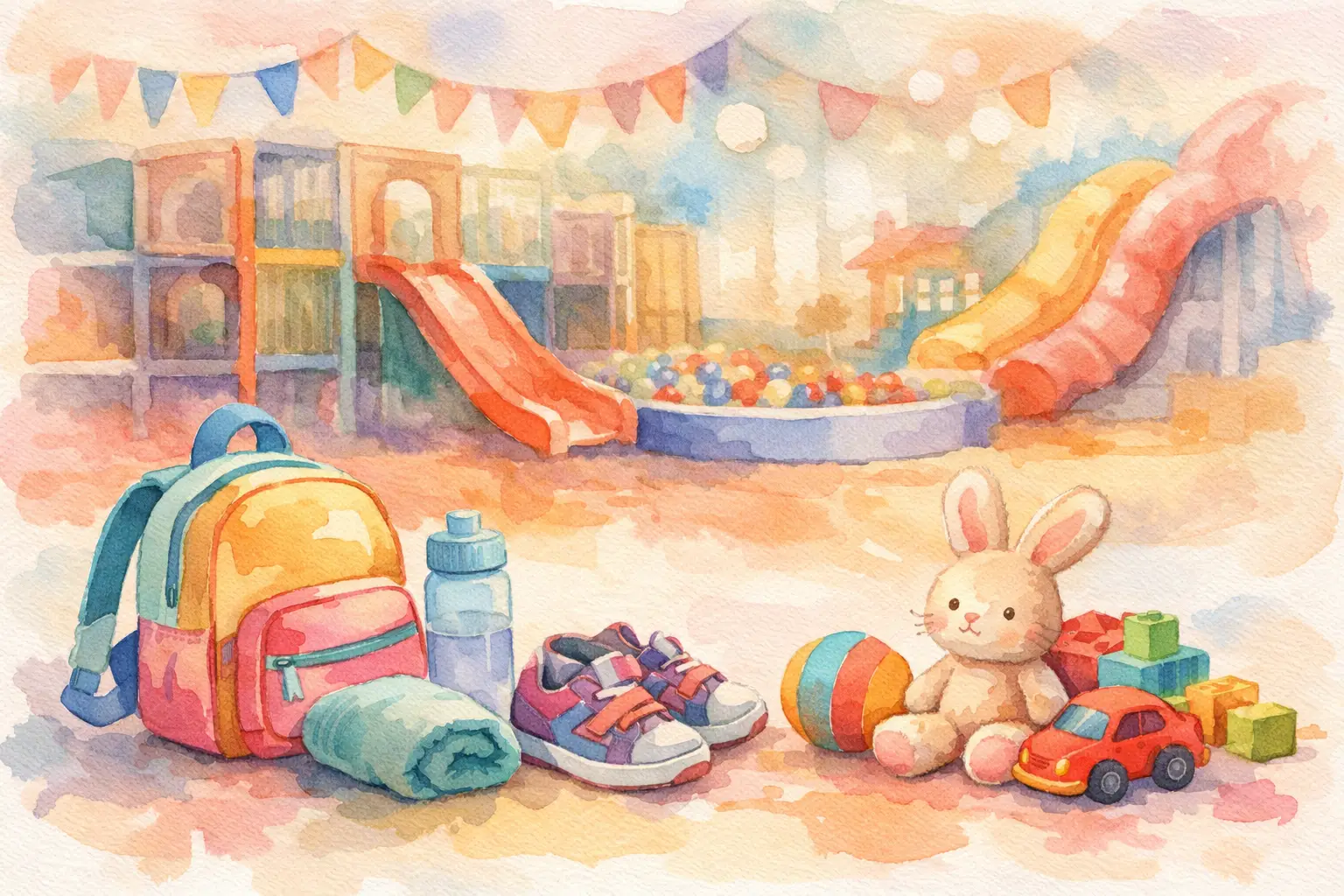
A last-minute search for what to bring indoor playground visits usually happens when one child is already wearing their shoes and another is asking when it is time to leave. The good news: a fun, active outing does not require a complicated packing list. A few thoughtful essentials can help your child play comfortably, help you stay prepared, and keep the day focused on movement, laughter, and time together.

Indoor playgrounds are designed to make active play easier in every season. Children can climb, slide, crawl, imagine, and connect with friends in a climate-controlled space, while parents and caregivers stay nearby to supervise and join the fun. What you pack may vary with your child’s age, the length of your visit, and whether you are attending a party, but the basics stay simple.

What to Bring to an Indoor Playground

Grip socks are the first thing to remember

For most indoor play spaces, socks are required for both children and adults entering the play areas. Grip socks are especially helpful because their non-slip soles give little feet more traction on climbing structures, padded floors, and slides. They also provide a cleaner, more comfortable play experience than bare feet.

Pack one pair for each person who may enter the play area, plus a spare pair for young children. Toddlers have a special talent for finding puddles, spilled drinks, and other reasons to need fresh socks. If your child wears orthotics or has sensory preferences, bring the socks that they already know and like.

Comfortable clothes made for movement

Choose clothes your child can move in easily. Soft pants, leggings, T-shirts, athletic shorts, and lightweight layers are usually great choices. Indoor playgrounds are climate-controlled, but active children can warm up quickly after several trips through a climbing structure.

Skip clothing that may get in the way, such as long dresses, loose scarves, dangling accessories, or shoes that are difficult to take on and off. Hair tied back can also make climbing, crawling, and sliding more comfortable. For babies and toddlers, a clean diaper and an extra outfit are worth bringing even for a short visit.

Water and a simple snack plan

Active play can make children thirsty fast. Bring a labeled water bottle with a secure lid, especially if your family plans to stay for more than an hour. Choose a bottle your child can open independently when possible, since a quick water break can help them return to play feeling refreshed.

Snack policies differ by venue, so check the location’s rules before packing food. If outside snacks are permitted, keep them simple, tidy, and mindful of common allergies. Think easy-to-manage options rather than crumbly snacks that can turn into a distraction. For a longer afternoon, it may be easier to plan a snack or meal before or after your visit.

A small bag with parent essentials

You do not need to bring everything from home. A compact bag is easier to manage while supervising an active child. The most useful items tend to be the practical ones:

  • Diapers, wipes, and a changing pad for babies and toddlers
  • Hand sanitizer and tissues for quick cleanups
  • Any needed medication, such as an inhaler or allergy medicine
  • A small comfort item for a child who is still adjusting to new places
  • Your phone, keys, wallet, and any required admission confirmation
  • A spare outfit for younger children or kids prone to spills

Keep valuables to a minimum. You will be more comfortable following your child around the play area when you are not worrying about a large purse, loose items, or something that could be misplaced.

What Not to Bring to an Indoor Playground

Just as helpful as knowing what to pack is knowing what to leave at home. Toys from home can get mixed in with play equipment, become a source of conflict, or be forgotten at the end of the visit. Small pieces can also create safety concerns around younger children.

Avoid bringing sharp objects, glass containers, gum, or messy foods into a play environment. Jewelry, watches, and items with long cords may be uncomfortable during active play. If your child has a favorite stuffed animal or small toy that helps with transitions, consider keeping it in your bag until it is time to leave rather than bringing it into the play structure.

For older children, phones and gaming devices are usually better left at home or with an adult. An indoor playground gives them a chance to move their bodies, solve little challenges, and interact with other children face to face.

Packing for Toddlers, Big Kids, and Playdates

A toddler’s needs are different from a nine-year-old’s, and planning around your child’s stage can make the outing feel more relaxed. For children age three and under, prioritize diapers or training supplies, a change of clothes, water, and a familiar comfort item. Toddlers may need more frequent breaks, so it helps to arrive without a rushed schedule.

For school-age children, focus on grip socks, water, and clothes that allow them to climb and move freely. They may not need much else, but they still benefit from a quick reminder to take breaks, use the restroom, and check in with you before changing play areas.

For a playdate, communicate with the other parent before you go. Confirm who is supervising, whether siblings are coming, and how long the children will stay. A simple plan prevents confusion and helps every child feel secure. If you are meeting friends, make sure each family brings its own required socks and personal care items rather than assuming someone else has extras.

A Quick Check Before You Leave

Before heading out, take a moment to review the venue’s current rules for admission, socks, food, outside items, and adult supervision. Policies are there to support a clean, safe, welcoming environment for every family. If you are attending a birthday party, ask the host whether food, favors, or a gift are expected and whether your child has any special instructions for the event.

It is also smart to talk with your child about a few simple play expectations. Remind them to use gentle hands, wait their turn, follow staff directions, and stay where you can see each other. These conversations do not need to feel serious. A quick reminder in the car can help children settle into the space with confidence.

At Peek-a-Boo Factory, families come to play, explore, and make the most of time together in a clean, supervised indoor setting. Bringing the right basics means you can spend less time managing details and more time watching your child build confidence one climb, slide, and new friendship at a time.

The best bag for an indoor playground is not the biggest one. It is the one that lets your family arrive ready to move, pause when needed, and head home with happy, tired children and a little more room in the day for connection.
Indoor Activities for Child Development That Matter

Indoor Activities for Child Development That Matter

A rainy Bay Area afternoon, a school break, or an extra-long weekend can leave children with plenty of energy and parents searching for a plan that feels worthwhile. The best indoor activities for child development do more than fill the time. They give children room to move, make choices, solve small problems, and connect with other people – all while having fun.

Why Active Indoor Play Supports Growing Minds and Bodies

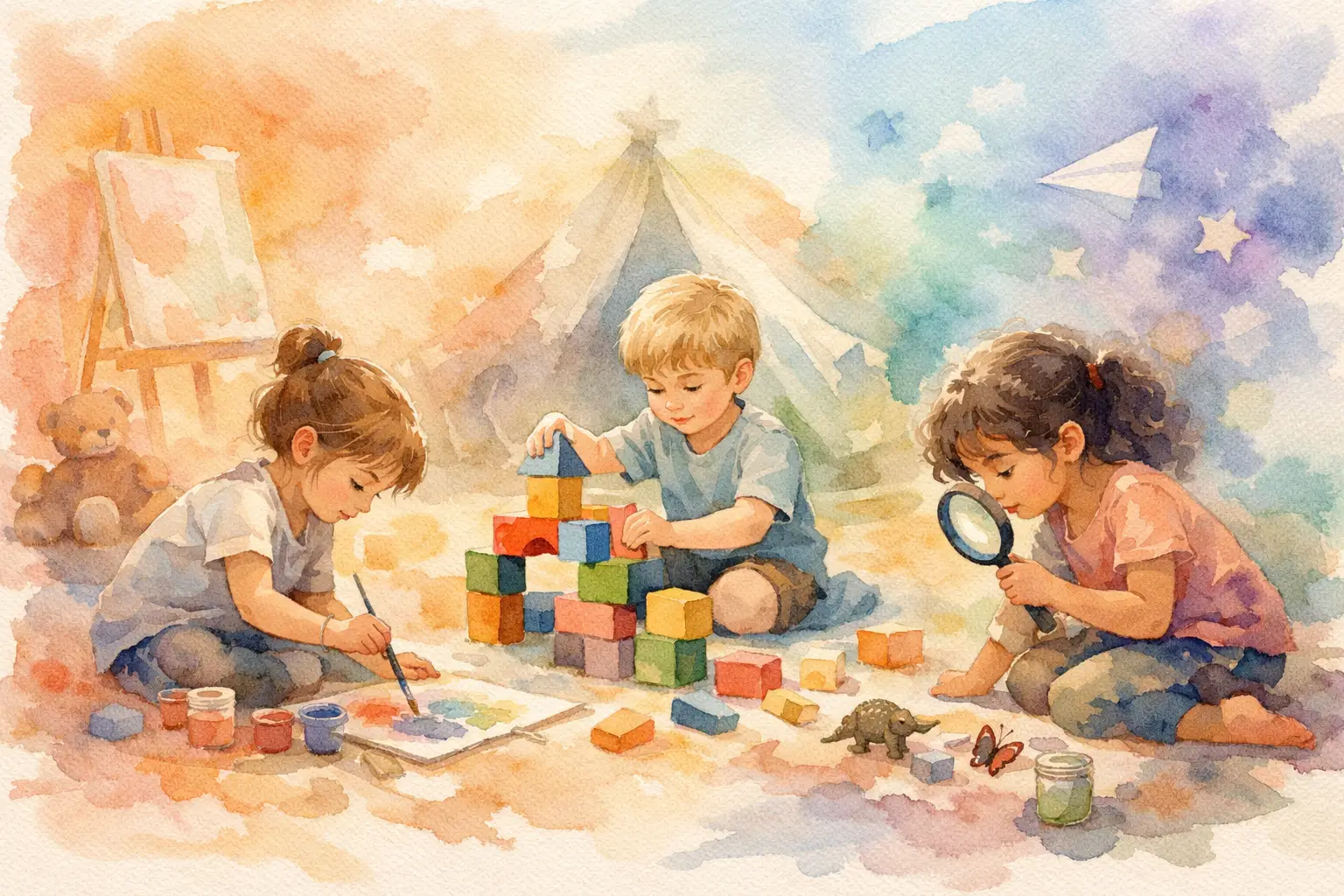
Children learn through their whole bodies. When they climb, crawl, balance, carry, build, and pretend, they are practicing skills that support everyday life. A child who navigates a play structure is building coordination and body awareness. A child who works out how to stack blocks without knocking them over is learning patience, planning, and persistence.

Indoor play can be especially valuable when outdoor plans are limited by rain, heat, smoke, early sunsets, or a busy family schedule. A well-designed play space gives children a dependable place to exercise and explore in a climate-controlled setting. For parents and caregivers, it also creates a welcome chance to be present, observe new milestones, and join the fun.

Development does not have to look like a lesson. In fact, children often learn most naturally when the activity feels like their idea. The goal is not to direct every moment. It is to offer safe, age-appropriate choices that invite active play.

Indoor Activities for Child Development at Every Stage

The right activity depends on a child’s age, interests, energy level, and comfort around others. A toddler may get the most from crawling through a soft tunnel, while an older child may be ready for a more challenging climbing course or a cooperative game with friends.

Movement Play Builds Physical Confidence

Active play helps children develop gross motor skills: the larger movements used for walking, jumping, climbing, running, and balancing. Indoor obstacle courses, slides, climbing structures, soft play areas, and games that involve following movement directions can all help children practice these skills.

Physical challenges should feel exciting, not overwhelming. Younger children benefit from low, soft equipment where they can explore at their own pace. Older children often enjoy activities with a goal, such as reaching the top of a structure, completing a course, or creating a new game with friends. In both cases, adult supervision and thoughtful design matter. Children build confidence when they can take manageable risks in a safe environment.

Pretend Play Strengthens Language and Imagination

When children turn a play kitchen into a restaurant or a fort into a castle, they are doing meaningful developmental work. Pretend play encourages them to use new words, tell stories, take on roles, and understand another person’s point of view.

You can support this kind of play with simple prompts: “What are you making?” or “Who is coming to your store?” Then let your child lead. There is no need to correct the story or rush it along. Imaginative play works best when children have the freedom to create their own rules.

Building and Sorting Encourage Problem-Solving

Blocks, magnetic tiles, puzzles, shape sorters, and stacking toys invite children to test ideas with their hands. A tower that falls gives immediate feedback. A puzzle piece that does not fit asks a child to slow down, turn it, and try again.

These activities support fine motor development as well as early problem-solving. They can also be calming after high-energy movement play. For children who are still learning to manage frustration, a nearby adult can offer encouragement without taking over: “You are working hard on that piece. Would you like to try turning it?”

Sensory Play Helps Children Explore Carefully

Sensory activities can include touching different safe textures, rolling balls, scooping materials, listening to music, or noticing colors and lights. For some children, sensory play is a joyful way to investigate the world. For others, especially children who are sensitive to noise or texture, it is best introduced gently and without pressure.

A child does not need to enjoy every activity to benefit from play. Offering choices and respecting a child’s comfort level builds trust. A quieter corner, a familiar toy, or a short break can make an active outing more successful.

Social Skills Grow Through Shared Play

Playdates and community play spaces give children opportunities that solo play cannot always provide. They learn how to wait for a turn, ask to join a game, share space, and respond when another child has a different idea. Those moments are not always smooth, and that is part of the learning.

Parents can help by putting simple words to what is happening. “He is using the slide right now. You can have a turn when he is done,” is clearer and more useful than simply saying, “Be patient.” If a disagreement happens, stay close, keep your language calm, and help children find a workable next step.

Children do not need to leave every playdate with a new best friend. Even brief positive interactions build familiarity and confidence. Over time, regular opportunities to play alongside peers can help children feel more comfortable in groups, classrooms, teams, and new settings.

Choose a Space That Lets Children Play Freely

For active indoor play, safety and cleanliness are part of the experience, not extras. Look for spaces with equipment designed for children, clear age guidance, well-maintained play areas, and room for caregivers to supervise comfortably. Dedicated toddler areas are especially helpful for children age three and under, who need a gentler place to explore away from bigger, faster-moving kids.

It also helps to consider your child’s needs on that particular day. A busy, social environment may be perfect when they are eager to move and meet friends. On another day, a shorter visit or a quieter activity may be a better fit. Following your child’s cues does not mean avoiding challenge. It means choosing a challenge they can handle.

At Peek-a-Boo Factory, families can find a safe, clean, climate-controlled environment where children can exercise, socialize, and explore with their caregivers nearby. Purpose-built indoor play makes it easier to say yes to movement and connection, even when the weather or schedule says otherwise.

Make Play Part of the Family Routine

You do not need to plan a full day to make indoor play meaningful. An hour of active movement after school, a weekend playdate, or a school-break outing can give children something valuable to anticipate. Before you go, set a simple expectation: try one new activity, use kind words with other children, or take a water break when needed.

During play, resist the urge to make every minute productive. Let children repeat the slide, rebuild the same tower, or revisit the pretend game they love. Repetition is often how skills become familiar and confidence takes hold.

The next time your child is bouncing off the walls, consider it an invitation: give that energy a safe place to go, and let play do the growing.

How Indoor Play Builds Social Skills for Kids

How Indoor Play Builds Social Skills for Kids

A child reaches the top of a climbing structure just as another child wants to come down. There is a pause, a few uncertain words, then a solution: “You go first.” Moments like this show how indoor play builds social skills in ways children can understand. They are not sitting through a lesson about cooperation. They are practicing it while having fun.

For parents, that is one of the lasting benefits of a well-designed indoor playground. Children get room to move, imagine, and burn energy while learning how to be part of a group. In a safe, clean, climate-controlled setting, those small interactions can add up to meaningful confidence.

Why play is a social practice space

Social skills are not simply about being outgoing or making friends quickly. They include noticing what others need, taking turns, using words to solve problems, managing disappointment, and knowing when to join a group or give someone space. These skills grow through repetition, especially when children can try them without the pressure of getting everything right.

Indoor play naturally creates those low-stakes opportunities. A child may need to wait for a slide, ask to use a toy, decide who plays which role in a pretend game, or recover when another child changes the rules. Adults can guide when needed, but children also benefit from having a little room to work through the moment themselves.

This matters because social development is rarely a straight line. A child who confidently greets everyone one day may hang back the next. A preschooler who shares at home may struggle with sharing a favorite play item in a busy room. That does not mean they are behind. It means they are learning in a real social setting, where people, feelings, and routines change.

How indoor play builds social skills through movement

Children often connect more easily when they are active. Instead of facing one another across a table and being expected to talk, they can climb, build, race, balance, or explore side by side. Movement gives them a shared focus, which can make starting a conversation feel less intimidating.

Taking turns becomes part of the fun

Waiting for a turn is hard, particularly for young children who are still learning that another child’s turn does not mean their own turn is gone. Slides, tunnels, obstacle features, and popular play areas make turn-taking concrete. Children can see the line, watch what happens next, and learn that waiting leads to another chance.

At first, a parent may need to offer simple language: “You’re waiting for the blue slide. Your turn is next.” Over time, children begin to use those words on their own. They may also learn to recognize the feeling of being hurried or skipped, which helps them develop fairness and empathy.

Shared challenges encourage teamwork

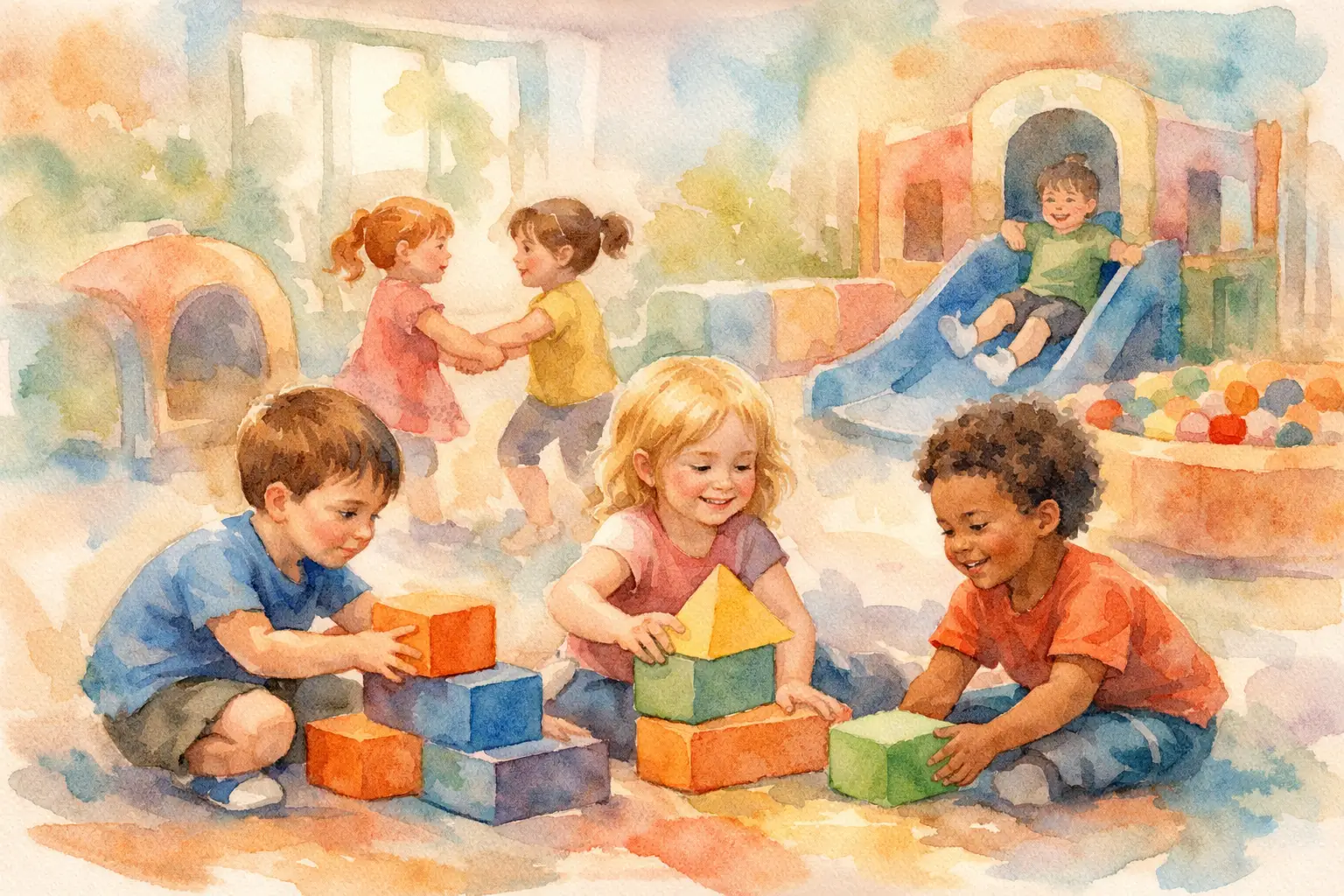
Some play is individual, but many activities invite children to cooperate. Two children may carry large foam blocks, create a pretend restaurant, or decide how to get everyone through an obstacle course. They learn that a game can work better when everyone contributes.

Teamwork does not always look calm or polished. It may include disagreements about who gets to be the chef, the superhero, or the customer. Those disagreements are useful when children have support to name the problem and find a fair next step. “You both want the same role. What else could we do?” is often more helpful than immediately assigning an answer.

Imaginative play gives children words for connection

Pretend play is social practice in disguise. When children play house, school, store, or space adventure, they must communicate ideas, listen to others, and adjust their own plan. A child might say, “You be the doctor and I’ll be the patient,” then discover their friend has a different idea. Learning to negotiate that change is a real social skill.

Imaginative play can be especially welcoming for children who are slow to warm up. They do not have to begin with a formal introduction. They can offer a pretend pizza, hand over a toy phone, or join a game by following its story. The play itself becomes the invitation.

Different ages need different kinds of social play

Children do not all play together in the same way, and that is why age-appropriate spaces matter. Toddlers often engage in parallel play, meaning they play near other children without fully playing together. They are still learning by watching, copying, and becoming comfortable around peers.

A dedicated toddler area gives younger children a chance to explore at their own pace, with equipment and play opportunities suited to their size and stage. Parents can stay close, help with early sharing language, and celebrate simple connections such as a wave, a smile, or handing a toy to another child.

Preschoolers are more likely to begin cooperative pretend games, though they still need help with turn-taking and big feelings. School-age children can often organize more involved games, make rules, and build friendships around shared interests. They also face more complex social challenges, such as deciding how to include a new child or handling a disagreement without ending the game.

There is no single “right” amount of interaction. Some children leave a play session with a new friend. Others spend much of the time observing before joining for five minutes near the end. Both experiences can be valuable. A child’s confidence often grows through familiar routines and repeated visits, not through being pushed to perform socially.

The parent’s role: close enough to help, calm enough to step back

Parents and caregivers play an important role in helping children transfer play moments into lasting skills. The goal is not to direct every interaction. It is to be available, notice when a child needs support, and offer clear language they can use again.

If a child wants to join a game, try a gentle prompt such as, “You could ask, ‘Can I play, too?’” If they are frustrated, name the feeling before solving the problem: “You really wanted that turn. Waiting feels hard.” This helps children understand what is happening inside them, which makes it easier to respond without hitting, grabbing, or giving up.

It can also help to pause before stepping in. If two children are working out who gets the next turn and both are safe, give them a few seconds. Children sometimes surprise adults with their ability to reach an agreement when they have the chance. Step in sooner when emotions are escalating, a child is being excluded repeatedly, or physical safety is involved.

A supervised indoor environment can make this balance easier. At Peek-a-Boo Factory, families can enjoy active play in a clean, welcoming setting while staying nearby to encourage, participate, and help children navigate the social moments that matter.

Making playdates and group visits more meaningful

A playdate does not need a packed schedule to support social growth. In fact, leaving room for free play is often where children do their best social learning. They have time to choose an activity, respond to each other’s ideas, and reset when a game changes direction.

For a first playdate, one compatible peer may be easier than a large group. Children who are new to group settings may do better arriving at a quieter time, when it is easier to explore before the space feels busy. On the other hand, children who enjoy high-energy group play may thrive during a lively weekend visit or birthday celebration.

Parties offer their own social lessons. Children practice greeting others, participating in group activities, waiting during games, and celebrating someone else’s special day. Not every child will want to be at the center of the action, and that is okay. A comfortable party space gives them ways to participate, whether that means joining a game, playing alongside a friend, or taking a quiet moment with a caregiver before returning.

What children carry beyond the playground

The skills practiced during indoor play travel with children. The child who learns to ask, “Can I have a turn when you’re done?” is building language they can use at school, in sports, at family gatherings, and on future playdates. The child who learns that a disagreement can be repaired is gaining resilience, not just manners.

These lessons take time. Children may need many chances to practice sharing, joining in, and handling frustration before those responses become familiar. What helps most is a welcoming place to play, caring adults nearby, and the freedom to try again.

The next time your child heads toward a new playmate, pauses at a busy slide, or invents a game with someone they just met, give the moment a little time. A few minutes of play can become a small but meaningful step toward confidence, kindness, and connection.

12 Activities for Kids School Breaks That Work

12 Activities for Kids School Breaks That Work

By 9:17 a.m. on the first day off school, many families have already heard, “What can we do?” Activities for kids school breaks do not need to fill every minute, but a little structure can turn a long day at home into time for movement, creativity, connection, and real rest. The best plan is usually a mix of active outings, quiet reset time, and opportunities for children to make choices.

School breaks look different from family to family. A toddler may need a familiar nap schedule, while an older child may be ready for a longer outing or a playdate. Bay Area weather can also change the plan quickly. Keeping a few dependable indoor and at-home options ready helps parents and caregivers make the day feel easier.

Activities for Kids School Breaks: Start With a Simple Rhythm

Children do well when they know what comes next, even during a week without school. That does not mean building a strict camp schedule at home. Try choosing one main activity for the day, then leave room for meals, free play, reading, and downtime.

For many families, mornings are best for active play, especially for children who wake up ready to move. Afternoons can be better for crafts, baking, puzzles, or a movie at home. If siblings are different ages, give each child one small choice during the day. A preschooler might choose the snack, while an older child chooses the music for a dance break.

12 Break-Time Ideas Children Can Actually Enjoy

1. Plan an indoor active-play outing

An indoor playground gives children space to climb, slide, balance, and use up energy in a climate-controlled setting. It is especially helpful on rainy days, smoky-air days, or afternoons when outdoor plans feel like too much work. Look for a clean, supervised environment with age-appropriate areas, including a separate space for toddlers when needed.

At Peek-a-Boo Factory, families can play together in a setting designed to support active movement, social interaction, and parent-child exploration. For a child who has spent several days indoors at home, even one active outing can make the rest of the day feel calmer.

2. Create a neighborhood scavenger hunt

A walk becomes more interesting when children have a mission. Ask them to find three different leaf colors, a house with a blue door, a bird, something shaped like a circle, and a truck. Young children can use picture clues, while older kids can make the list themselves.

Keep the goal simple: notice the neighborhood together. There is no need to cover a long distance. Even a 20-minute walk provides fresh air, conversation, and a welcome change of scenery.

3. Host a build-and-create challenge

Set out cardboard boxes, tape, paper, washable markers, and recyclables, then give children a prompt. They could build a pretend pet clinic, a spaceship, a miniature city, or a fort for reading. The project does not have to be Pinterest-perfect to be valuable.

This type of open-ended activity works well because it combines problem-solving with imagination. It also gives siblings different roles. One child can design, another can build, and another can decorate.

4. Make a playdate feel purposeful

A playdate does not need a packed agenda, but one shared activity can help children settle in. Try decorating cookies, making paper puppets, building a block town, or organizing a simple dance party. Then let free play take over.

For younger children, shorter playdates are often more successful than a full afternoon. Older children may enjoy a theme, such as board games, bracelet-making, or a backyard sports challenge. Adult supervision still matters, particularly when children are learning how to share space, negotiate rules, and handle big feelings.

5. Turn the kitchen into a learning space

Cooking offers more than a snack. Children can count scoops, compare sizes, practice following directions, and take pride in helping the family. Choose a recipe with safe, hands-on tasks: fruit kabobs, mini pizzas, trail mix, muffins, or smoothies.

Match the job to the child. Toddlers can pour pre-measured ingredients or sprinkle cheese. Older children can read the recipe, measure, and help clean up. The cleanup may not be fast, but the skills are real.

6. Set up a backyard or living-room obstacle course

Painters tape, couch cushions, laundry baskets, and pillows can become a course for hopping, crawling, balancing, and tossing. Add challenge cards such as “walk backward,” “do five frog jumps,” or “carry a stuffed animal to the finish line.”

Safety comes first. Keep paths clear, avoid climbing on unstable furniture, and make sure the activity fits the available space. For families in apartments or smaller homes, a few rounds of movement games can still help children reset without needing much equipment.

7. Give older kids a helpful project

School breaks can be a good time for children to contribute in ways that feel meaningful rather than like a punishment. An older child might organize books by topic, help sort outgrown clothes, wash toys, plan a family game night, or create a menu for lunch.

The key is ownership. Instead of saying, “Clean your room,” try, “Can you make a reading corner you would want to use?” Children are more likely to stay engaged when the result belongs to them.

8. Visit a local library

Libraries are a reliable choice when families want a quieter outing. Children can choose books that match their current interests, spend time reading together, or join an available break-time activity. For a child who is used to the school routine, selecting a few books can keep reading enjoyable without making it feel like homework.

Let children choose at least one book just for fun. Graphic novels, joke books, beginner cookbooks, and animal facts all count as reading.

9. Build a blanket-fort reading break

Not every break activity should be high energy. A blanket fort, a stack of books, and a small snack can create a calm afternoon ritual. Invite children to read independently, listen to a story, or make up one together.

This is also a helpful option after a busy outing. Children, like adults, need time to decompress after lots of noise, movement, and social interaction.

10. Try a family game tournament

Choose games that fit the ages and attention spans in your home. A tournament can be as simple as three rounds of a card game, charades, bingo, or a puzzle race. Keep the focus on fun rather than a complicated scoring system.

For mixed-age families, pair an adult with a younger child or choose cooperative games where everyone works toward the same goal. It reduces frustration and gives children a chance to practice patience, turn-taking, and gracious losing.

11. Make room for pretend play

Pretend play is not “just playing.” When children run a pretend restaurant, veterinarian office, grocery store, or school, they practice language, empathy, planning, and cooperation. A few simple props go a long way: stuffed animals, paper menus, empty food containers, dress-up clothes, or toy cash registers.

Avoid taking over the story. Asking, “What happens next?” gives children room to lead. Their answer may be surprising, and that is part of the fun.

12. Plan one small act of kindness

A school break can include time to think about others. Children might draw pictures for a neighbor, help bake something to share, make a thank-you card, or call a grandparent. These moments do not need to be formal service projects to help children feel connected to their community.

For younger children, keep the action immediate and concrete. For older children, talk about who might appreciate their help and let them suggest an idea.

Choose the Right Activity for the Day You Have

A great break day is not always the busiest one. If your child is restless and bouncing off the walls, prioritize active movement. If they are tired, overwhelmed, or recovering from a busy weekend, choose something quiet and familiar. If they are missing friends, an indoor play outing or playdate may be the right fit.

It also depends on your own capacity. Caregivers do not need to create a new experience every day. Repeating a favorite playground visit, library trip, baking project, or living-room dance party is completely fine. Children often enjoy the comfort of knowing what to expect.

Leave a little open space in the schedule. The unplanned moments – the block tower that becomes a city, the fort that stays up all afternoon, the walk that turns into a bug hunt – are often the parts children remember most.

How to Plan a Kids Birthday Party Without Stress

How to Plan a Kids Birthday Party Without Stress

A child’s birthday can feel like a big, joyful milestone – and a surprisingly big project. Between choosing a date, managing guest lists, planning food, and making sure children have room to play, parents can end up spending the party worrying instead of celebrating. Knowing how to plan a kids birthday party starts with one helpful shift: build the celebration around your child and your family’s real needs, not a picture-perfect idea.

The best parties give children a chance to move, laugh, and connect with friends while adults feel comfortable, informed, and able to enjoy the day. A simple plan, a realistic budget, and a setting that suits the group can make that happen.

Start with the birthday child

Before choosing decorations or sending invitations, ask your child a few easy questions. Do they want a busy party with a group of friends, a small gathering with cousins, or a celebration centered on one favorite activity? A child who loves climbing, racing, and imaginative games may be happiest with active play. A child who gets overwhelmed in large groups may enjoy a shorter party with fewer guests.

Age matters, too. Toddlers often do best with familiar faces, flexible playtime, and a celebration that stays short. School-age children may be ready for more independence, group games, and a larger guest list. Older children might care more about inviting friends than following a specific theme.

You do not need to turn every interest into an elaborate party concept. A favorite color, animal, sport, or character can guide a few simple choices, from the cake to the table decorations. The goal is for your child to feel recognized, not for every detail to match.

Set a budget before the details grow

Birthday costs can add up quickly when decisions happen one at a time. Set a comfortable total budget first, then divide it among the parts that matter most to your family: the venue or home setup, food, cake, invitations, decorations, activities, and party favors.

It helps to decide what you are willing to simplify. For many families, a beautiful custom cake is worth it, while matching plates and elaborate centerpieces are not. For others, an active venue that removes the need to clean, rearrange furniture, or plan games is the priority. There is no one right answer. The best choice is the one that gives your child a fun celebration without creating financial or logistical stress.

Leave a small amount aside for last-minute needs, such as extra snacks, a forgotten candle, or an additional adult guest. That little cushion can make planning feel much calmer.

Choose a date, time, and guest list that work together

A party date is not just a calendar decision. It affects attendance, energy levels, food expectations, and the kind of celebration you can host. Weekend mornings can work especially well for younger children, who are often at their best earlier in the day. Afternoon parties may suit school-age kids, but they can overlap with naps, sports, and family commitments.

Keep the guest list manageable for the space and the adults available to supervise. A helpful rule is to consider your child’s comfort, not just the number of invitations you can send. If your child has a few close friends, a smaller party may feel more meaningful and easier to enjoy.

When inviting classmates, check school policies and be thoughtful about inclusion. If invitations are being handed out at school, it is usually kindest to invite the entire class, all children of the same group, or distribute invitations privately outside school.

Send invitations about three to five weeks ahead when possible. Include the date, start and end time, location, RSVP details, and any information parents need to know, such as whether socks are required or whether adults should stay. Clear communication helps families plan and helps you prepare accurately.

Pick a party setting that reduces work

Hosting at home can be personal and flexible, especially for a very small gathering. It also means preparing the space, setting up activities, supervising different age groups, serving food, and handling cleanup afterward. That can be a good fit when you enjoy hosting and have the room for it.

A party venue can be a better choice when children need space to move, the weather is unpredictable, or you want the day to feel more organized. Look for a clean, climate-controlled environment with age-appropriate play areas and clear safety practices. Ask how supervision works, what is included, whether food is allowed, and how much setup and cleanup you are responsible for.

For families in the Bay Area and Northern California, an indoor play setting can be especially useful when fog, rain, heat, or busy home schedules make an outdoor or at-home party less appealing. At Peek-a-Boo Factory, children can play, exercise, and socialize in a supervised indoor environment designed for kids, while parents have a more manageable celebration to enjoy alongside them.

Plan a simple party flow

Children do not need every minute scheduled. In fact, too many transitions can create more excitement than enjoyment. A clear, flexible flow gives guests time to arrive, settle in, play, eat, and celebrate without anyone wondering what should happen next.

For a two-hour party, plan for an arrival window, open play or a main activity, food, cake, and a few final minutes for goodbyes. If children are very young, serve food earlier rather than waiting until they are tired or hungry. For older kids, you may want to save cake until after an energetic activity so they can focus during the celebration.

A practical planning sequence looks like this:

  • Welcome guests and give children time to get comfortable.
  • Let the main play activity or entertainment take center stage.
  • Pause for a simple meal or snack and water breaks.
  • Gather for cake, candles, and singing.
  • End with a warm goodbye and any favors or take-home items.

Keep one low-pressure backup activity available, such as coloring sheets or a simple table game. You may never need it, but it can help if a child arrives early, a group needs a quieter moment, or an activity ends sooner than expected.

Keep food easy and allergy-aware

Party food does not need to be a full meal unless the party falls during lunch or dinner. The time of day should set expectations. A late-morning party might include fruit, mini sandwiches, and a small sweet treat. A mid-afternoon party can be as simple as snacks, cake, and drinks.

Choose foods that are easy for children to eat and easy for adults to serve. Individual portions can reduce mess and make it easier to accommodate dietary needs. Ask about allergies in the RSVP process, then label foods when needed. If you are unsure how to safely handle a severe allergy, ask the child’s parent for guidance rather than guessing.

Have water available throughout the party, particularly when children are running, climbing, or playing actively. Juice and sweet drinks can be part of the celebration, but water is often what busy children need most.

Make safety and comfort part of the plan

A fun party feels better when parents know the basics are covered. Share the schedule and location clearly. Keep an adult list with parent phone numbers, note allergies or medical needs, and make sure adults know where children are expected to play.

If the guest list includes toddlers and older children, think about how both groups will use the space. Younger children may need a dedicated area where they can explore at their own pace, away from bigger, faster play. Older kids still need clear boundaries and enough supervision to keep the energy positive.

You can also make guests feel welcome by planning for the adults. A place to sit, a clear view of the play area, and a relaxed expectation that caregivers can stay involved all make a difference. Children often have more confidence trying something new when a familiar adult is nearby.

Let go of the details no one will remember

Children remember the feeling of a party far more than whether the napkins matched the balloons. They remember being sung to, racing with friends, blowing out candles, and seeing people they love in the same room. If a decoration falls down or the cake is not perfectly cut, the celebration is still working.

Give yourself permission to choose the easier option when it protects your time and energy. A birthday party is a chance to celebrate your child’s growth, friendships, and bright personality. When you make space to be present for those moments, you give your family the part of the day that lasts.

How to Choose a Toddler Play Area Under 3

How to Choose a Toddler Play Area Under 3

A toddler can spot an inviting slide, soft climber, or bright play tunnel from across the room. Parents notice something else first: whether the space feels clean, whether the equipment fits small bodies, and whether they can stay close enough to supervise with confidence. A toddler play area under 3 should make room for both needs – joyful movement for little ones and real peace of mind for the adults caring for them.

For children under three, play is not simply a way to pass an afternoon. It is how they practice balance, test new movements, build language, and learn that being near other children can be fun. The right indoor environment supports those discoveries without asking toddlers to keep up with bigger, faster kids.

Why Toddlers Need Their Own Play Space

Babies, young toddlers, and preschoolers all develop quickly, but children under three share a need for play that is scaled to their size and stage. A climbing structure that feels manageable to a two-year-old can feel frustrating or unsafe if it is designed for school-age children. Likewise, a crowded open floor may be exciting for older kids but overwhelming for a child who is still finding their footing.

A dedicated toddler area gives young children the freedom to explore at their own pace. They can crawl, cruise, climb a few low steps, slide, stack, push, and pretend without constantly stepping aside for bigger children. That space matters most when a child is newly mobile or still learning to navigate busy social settings.

It also gives caregivers a clearer role. Instead of trying to track a toddler through a large mixed-age play structure, parents and guardians can sit nearby, join in, and respond quickly when their child needs a hand. Independent play is valuable, but for this age group, independence grows best from a secure connection with a familiar adult close by.

What to Look for in a Toddler Play Area Under 3

The best spaces are designed around the way young children actually move. Look for soft flooring, padded edges, low climbing features, and equipment with openings and steps that small children can use comfortably. A toddler should be able to explore without being repeatedly lifted onto every feature, though adult support is still part of the experience.

Cleanliness should be easy to see and easy to trust. Toddlers touch everything, sit on the floor, and often put toys or fingers in their mouths. A well-maintained indoor play area should have a clear commitment to regular cleaning, orderly play equipment, and a staff presence that helps the space stay welcoming throughout the day.

Supervision is another essential part of the picture. Parents remain responsible for their children, but a thoughtfully supervised facility provides added reassurance. Staff members can help maintain appropriate play, monitor the overall environment, and support a safer experience for every family. This is especially helpful when several children are using the same small play area.

Climate control can make a bigger difference than it first appears. Bay Area and Northern California families know that outdoor plans can change with wind, rain, heat, smoke, or an unexpectedly chilly afternoon. An indoor, climate-controlled setting gives toddlers a dependable place to move their bodies comfortably, whatever the weather is doing outside.

Space to Move Without Too Much Stimulation

Toddlers need activity, but more is not always better. A space filled with loud sounds, towering structures, and fast-moving older children can be too much for some young children. A well-planned toddler section balances active play with a calmer layout, offering clear sightlines and enough room to move without feeling chaotic.

It helps when there is variety within that smaller scale. A young child may begin by crawling through a tunnel, then spend ten minutes carrying soft blocks, then return to the same slide again and again. Repetition is not boredom. It is practice. Toddlers build confidence when they can repeat a skill until it feels familiar.

Materials That Invite Learning

The most engaging toddler play does not have to look like a lesson. Soft shapes, pretend-play pieces, sensory-friendly textures, simple puzzles, ride-on toys, and low climbing elements can all support learning through action. As children reach, grasp, carry, sort, and climb, they are strengthening coordination and learning how their bodies work.

Play near other children also creates gentle social opportunities. A child may offer a toy, imitate another toddler’s movement, or begin to understand the challenge of waiting for a turn. These moments do not always happen neatly. Toddlers are still learning to communicate their feelings. A supportive environment gives caregivers the chance to guide those early interactions with patience.

Choosing the Right Time for Your Child

Even a wonderful play space can feel difficult if a toddler arrives tired, hungry, or near nap time. For many families, a morning visit or an early afternoon outing works best. Children tend to have more energy, and caregivers can make play part of a predictable routine: snack, play, rest.

If your child is cautious in new places, plan a shorter first visit. Stay close, let them observe, and avoid pressuring them to try every feature. Some toddlers run in immediately; others need ten or twenty minutes before they feel ready. Both responses are normal. Familiarity often turns hesitation into confidence over a few visits.

For a more energetic toddler, choose a time when they can have room to move and reset. Indoor play can be especially useful on days when a child has been cooped up at home, when outdoor conditions are not ideal, or when the family needs an activity that works for siblings of different ages.

Making Indoor Play Easier for Everyone

A little preparation helps the visit go smoothly. Dress toddlers in comfortable clothes that allow them to crawl and climb, and bring the items your child may need afterward, such as water, snacks, diapers, or a change of clothes. Before entering, use simple language to set expectations: gentle hands, walking feet when needed, and staying where your grown-up can see you.

Try to follow your child’s lead once play begins. If they are drawn to a soft obstacle course, let them explore it several times. If they want to sit nearby and watch other children first, that is useful play, too. Toddlers learn through observation before they are ready to participate.

Parents do not need to entertain every moment. Being present can mean sitting close, offering a reassuring smile, naming what your child is doing, and stepping in when help is needed. “You climbed up two steps” or “That ball rolled under the tunnel” adds language to their experience without taking over.

A Place for Playdates and Growing Families

A toddler-friendly indoor playground can also make social time feel more manageable. Meeting another parent and child in a purpose-built space removes the pressure of hosting at home and gives toddlers a shared activity from the start. There is no need for elaborate plans when the environment already offers safe ways to move, explore, and connect.

Families with older children benefit from an age-appropriate toddler area, too. Older siblings can enjoy more active features while younger children have a place that better matches their needs. At Peek-a-Boo Factory, dedicated toddler play for children three and under helps families enjoy the same outing while respecting the different ways children play and grow.

The goal is not to fill every minute with activity. It is to give your toddler a safe, clean place to practice being curious – one small climb, one shared toy, and one happy burst of movement at a time.