A soft, padded ramp can look like the perfect place for a baby to explore. But before setting your little one down, most parents have the same practical question: can babies use soft play safely? Usually, yes – when the space is designed for young children, your baby is developmentally ready, and you stay close enough to guide every moment.
Soft play is not one single activity. A calm toddler area with low foam shapes is very different from a busy multi-level structure filled with running preschoolers. The right experience depends on your baby’s age, mobility, comfort level, and the setup of the play space.
Can Babies Use Soft Play Safely?
Babies can enjoy soft play when they have an age-appropriate area and active adult supervision. For many families, the best introduction is a dedicated infant or toddler zone with padded flooring, low equipment, and enough room for babies to sit, crawl, cruise, and explore without being overwhelmed by bigger children.
For a baby who is not yet sitting independently, soft play may be less about climbing and more about a short, supported outing. Sitting together on a clean padded mat, reaching for soft blocks, watching other children, and practicing tummy time can all be meaningful forms of play. There is no need to rush your baby onto equipment they cannot use comfortably.
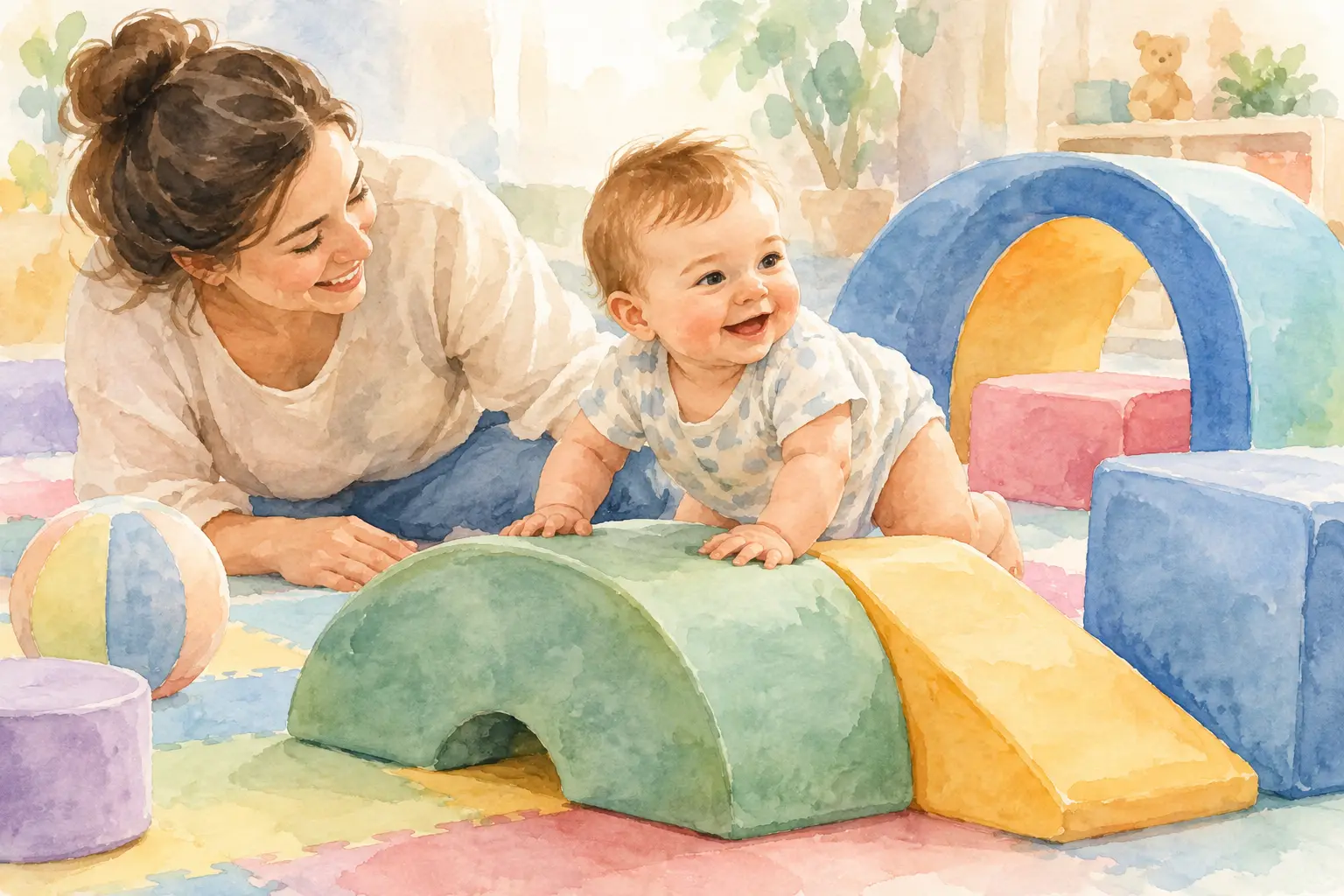
Once babies can sit steadily, crawl, pull up, or cruise along furniture, they often get more from low foam steps, gentle slopes, tunnels, and soft obstacles. These experiences give them a chance to build confidence in their own movement while you stay within arm’s reach.
The key is not simply whether the equipment is soft. It is whether the space matches your child’s current abilities. Padded surfaces can reduce the impact of ordinary tumbles, but they do not make falls, crowding, or unsupervised play risk-free.
When Is a Baby Ready for Soft Play?
Readiness looks different for every child. Age can be a helpful starting point, but developmental skills tell you more. A baby who can hold their head up well and sit with control may enjoy a quiet, low-level play area sooner than a baby who is still unsteady.
Crawlers are often especially interested in soft play. They can move at their own pace, investigate different textures, and practice navigating around shapes and small obstacles. Early walkers may love climbing a few padded steps, but they still need a parent close by to prevent them from toppling or wandering into more active areas.
If your baby was born prematurely, has a medical condition, is recovering from illness, or has specific mobility concerns, ask your pediatrician what types of physical play are appropriate. A good play session should feel curious and enjoyable, not like a challenge your baby has to push through.
Pay attention to your child’s signals once you arrive. A baby who turns away, cries, becomes unusually quiet, or clings tightly may need a break. New sounds, bright colors, and the movement of older children can be exciting, but they can also be a lot to process.
What to Look for in a Baby-Friendly Soft Play Area
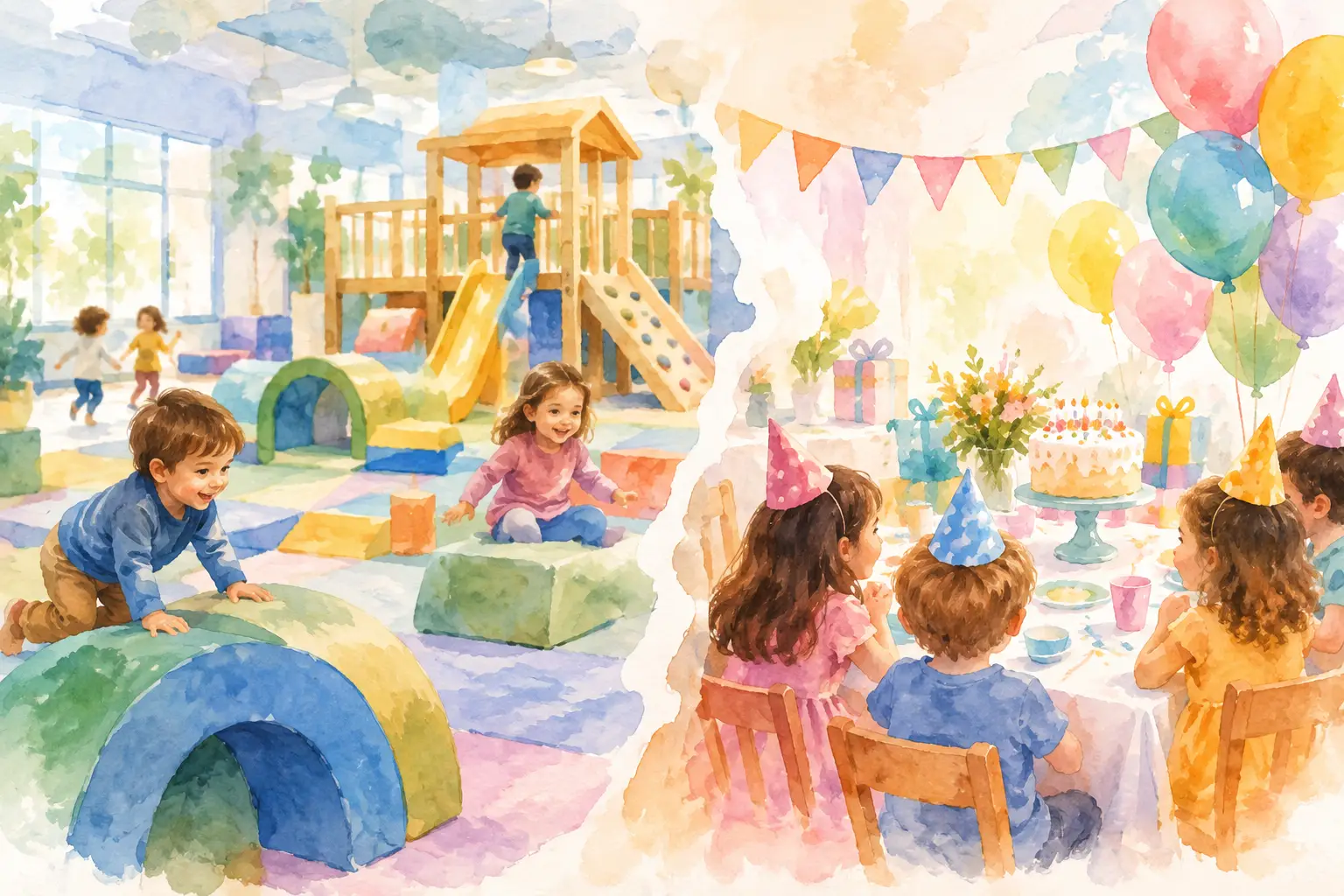
Not every indoor play space is a good fit for babies. Before you visit, look for a clearly separated area intended for toddlers or children three and under. Separation matters because toddlers and babies play differently than school-age children. They move more slowly, have less awareness of their surroundings, and are more vulnerable to accidental bumps.
A baby-friendly area should have clean, well-maintained padded flooring and equipment without loose pieces, sharp edges, tears, or exposed hardware. Low platforms and gentle features are usually better than tall climbers or steep slides. You should also be able to see your child easily from where you are sitting or standing.
Cleanliness is another major consideration, especially for babies who explore with their hands and mouths. Choose a facility with visible cleaning routines and clear expectations about illness. If your child has a fever, vomiting, diarrhea, a contagious rash, or symptoms that make them feel unwell, it is best to save the playdate for another day. This small choice helps protect other families, too.
A climate-controlled indoor setting can be particularly helpful during hot Bay Area afternoons, rainy days, or smoky conditions when outdoor play is not appealing. Still, indoor comfort does not replace supervision. Even in a dedicated toddler area, your attention is your baby’s most important safety support.
How to Make Your First Visit Feel Easier
Try visiting at a quieter time if you can. A less crowded session gives your baby room to observe, settle in, and explore without constant movement around them. It also makes it easier for you to learn the layout and identify the areas that feel right for your child.
Start small. Sit on the floor beside your baby, offer a familiar toy if the facility allows it, and let them decide how much they want to engage. Some babies head straight for a soft tunnel. Others need ten minutes in your lap before they are ready to crawl away. Both responses are completely normal.
Dress your baby in comfortable clothes that allow movement. Clothes with easy-to-grip knees can be helpful for crawlers, while socks with grips may be useful if the facility requires socks. Avoid dangling accessories, long necklaces, or anything that could catch on equipment.
Keep the visit short at first. Twenty or thirty minutes of active exploring can be plenty for a young baby. Leaving while they are still content is often better than waiting until they are overtired. A snack, feeding, or diaper change beforehand can also make the outing more pleasant for everyone.
Stay Close, Even in a Supervised Facility
When a venue says it is supervised, that typically means team members help maintain a safe, orderly environment and enforce facility rules. It does not mean they can provide one-on-one care for each child. Parents and caregivers should remain responsible for watching and assisting their babies at all times.
For babies, close supervision means more than checking in from across the room. Stay nearby when they are climbing, crawling near other children, or trying a new piece of equipment. Gently redirect them if older kids enter the toddler space, if they begin mouthing shared equipment, or if they seem too tired to continue safely.
It also helps to give older siblings a simple plan. They may be eager to play together, but a fast-moving five-year-old and a newly crawling baby need different kinds of space. Encourage siblings to visit, wave, or play gently beside the baby, then return to the big-kid area for more active play.
The Benefits Go Beyond Burning Energy
Soft play gives babies more than a padded place to move. Reaching, crawling, climbing, and balancing support early physical development. Trying a new slope or tunnel can also build confidence as your child learns, through practice, what their body can do.
There are social benefits, too. Babies learn by watching. Seeing other children take turns, move through a space, and interact with caregivers gives them new information, even before they have many words. For parents, these outings can bring a welcome chance to connect with other local families who understand the rhythm of naps, snacks, and toddler-sized adventures.
At Peek-a-Boo Factory, a dedicated area for children three and under helps younger visitors explore at their own pace while older children have room for bigger play. That kind of age-appropriate design lets families share an outing without expecting every child to enjoy the same equipment.
A Few Times to Wait
Soft play is not the right choice every day. Consider waiting if your baby is sick, overtired, recently injured, or having a difficult day with unfamiliar environments. It is also wise to skip a particular area if it is crowded with larger children or if the equipment appears damaged or poorly maintained.
Trust your instincts. You know your baby’s usual energy, temperament, and abilities better than anyone. If a space feels too busy or your child seems uneasy, it is fine to step out, reset, and try again another time.
The best first soft-play visits are not about reaching the top of a climber or staying for hours. They are about giving your baby a safe, clean place to look around, move a little, and discover something new with you close by.