Private Parties Versus Public Sessions: Which Fits?

Private Parties Versus Public Sessions: Which Fits?

A child’s best play day does not always look the same. Some days call for a few familiar friends, a birthday cake, and a room full of celebration. Other days call for an easy outing where kids can climb, explore, and meet new playmates. When parents compare private parties versus public sessions, the right choice usually comes down to the occasion, the children involved, and how much planning their family wants to take on.

Both options create room for active play, social connection, and parent-child time in a safe, clean, climate-controlled setting. The difference is not that one is better than the other. It is about choosing the kind of experience that helps your child and your family enjoy the day.

Private Parties Versus Public Sessions at a Glance

A private party is designed around one family’s celebration. The guest list, timing, food plans, and birthday moments are organized around your group. It gives children a shared event to look forward to and gives parents a defined setting for hosting without turning their home upside down.

A public session is an open play visit during regular admission hours. Families share the play space with other guests, making it a flexible choice for a weekday activity, a weekend energy release, a school-break outing, or an impromptu playdate. Parents can arrive ready for play without coordinating invitations, decorations, or a large group.

The best fit depends on whether you are creating a milestone event or simply making space for a great afternoon.

When a Private Party Makes Sense

Birthdays are the most familiar reason to book a private party, but they are not the only one. Families also choose private events for graduations, team celebrations, class gatherings, family reunions, or a special get-together when children have not seen each other in a while.

The biggest benefit is focus. The day centers on your child and the people you invite. Young guests know they are there for a shared purpose, which can make the experience feel especially exciting for a birthday child. Parents also appreciate having a planned beginning, middle, and end rather than trying to entertain a group at home for several hours.

More room for the people you know

For many children, especially toddlers and preschoolers, familiar faces can make a celebration feel more comfortable. A private party creates a predictable social setting: cousins, classmates, neighbors, and friends come together in one place. That can be helpful for children who need a little extra time to warm up in larger groups.

Older children often enjoy the same benefit for a different reason. They can move freely with their friends, stay active, and spend less time waiting for an adult to set up the next activity. An indoor playground gives them room to play while adults can supervise, visit, and take part in the fun.

Less work at home

Hosting at home can sound simple until the to-do list grows. Cleaning before guests arrive, moving breakable items, preparing food, finding enough seating, planning activities, and cleaning again afterward can turn a child’s celebration into a long weekend project.

A party venue offers a more organized path. The play environment is already built for children, weather is not a concern, and the celebration has a designated place to happen. At Peek-a-Boo Factory, families can celebrate in an environment created for active play, age-appropriate exploration, and parent peace of mind.

That convenience matters most when a parent wants to be present for the celebration, not stuck in the kitchen or managing every transition.

A few party trade-offs to consider

Private parties usually require advance planning. Popular weekend times may book earlier, and parents need to estimate a guest count, communicate details, and coordinate with other families. A planned event can be wonderfully smooth, but it is still a commitment.

Consider your child’s personality, too. Some children love being the center of attention. Others prefer a smaller group or feel overwhelmed by a big birthday moment. A private party does not need to be large to feel meaningful. A short guest list of close friends may be the right choice for a child who thrives in a calmer setting.

When a Public Session Is the Better Choice

Public sessions are made for the everyday need parents know well: the kids have energy, the weather is not cooperating, and everyone needs a change of scenery. An indoor play visit provides a place for movement and imagination without requiring weeks of preparation.

It can be as simple as meeting one friend after preschool, bringing siblings for an afternoon outing, or giving a grandparent and grandchild a fun place to spend time together. Public play also works well for parents who want to try a new routine before committing to a larger event.

Flexibility for real family schedules

Family schedules change quickly. Naps run late, errands take longer than expected, a rainy day changes plans, or a child wakes up ready to move. Public sessions offer flexibility that a reserved party cannot always provide.

This makes them especially useful for caregivers looking for an activity that supports both fun and routine. Children can burn energy through active play, while parents have a comfortable indoor environment where they can supervise and engage alongside them. For families with children of different ages, a dedicated toddler area can help younger children explore in a space that feels more suited to their stage.

New social opportunities

A public session can also give children valuable practice with the small social moments that happen naturally in play: taking turns, joining a game, watching how another child approaches a challenge, and making a new friend. These interactions are not forced, and that is part of their value.

For children who are new to group settings, public play can be a gentle way to build confidence. They can stay close to a parent at first, then gradually branch out as they feel comfortable. For regular visitors, seeing familiar families over time can help turn an indoor play visit into part of their community.

A few public-session trade-offs to consider

Because public sessions welcome multiple families, the atmosphere can vary. One visit may be quiet and relaxed; another may be lively with children of many ages playing at once. Parents should plan to stay engaged with their child, particularly if they are very young or still learning how to navigate group play.

Public sessions also are not built around one child’s celebration. If your child wants a cake, gifts, invited guests, and a dedicated birthday experience, a party reservation will likely feel more special and better organized. Public play is about flexibility and shared fun, not a personalized event schedule.

How to Choose for Your Child

Start with the purpose of the visit. If you are marking a major occasion and want your family’s guests together at a set time, a private party is likely the clear choice. If you need a dependable activity for an ordinary Tuesday, a rainy Saturday, or a last-minute playdate, public play may serve your family better.

Next, think about your child’s social style. A child who loves a crowd of friends may be thrilled by a party. A child who enjoys watching, warming up slowly, or playing beside others may get just as much value from public sessions. There is no wrong answer, and preferences can change as children grow.

Your own capacity matters, too. Some parents enjoy planning a celebration and gathering loved ones. Others need an outing with little preparation and no cleanup waiting at home. Choosing the option that reduces stress for the adults often makes the experience more enjoyable for children.

You Can Use Both

Private parties and public sessions do not have to compete. Many families use public play for regular movement, social time, and parent-child outings, then choose a private party when a birthday or milestone arrives. Regular visits can even help children feel more comfortable with the play environment before they attend a bigger celebration.

Whether your child is racing to the next play feature, carefully exploring the toddler area, or laughing with a friend they just met, the goal is simple: give them a place to move, connect, and be a kid. Choose the visit that fits this moment, then leave room for play to do what it does best.
Children’s Gym Versus Play Center: Which Fits?

Children's Gym Versus Play Center: Which Fits?

A rainy Saturday, a high-energy toddler, and an older child asking to do something fun can turn the children’s gym versus play center question into a real family decision. Both can give kids a welcome place to move, meet other children, and step away from screens. The better choice depends on your child’s age, personality, energy level, and what kind of outing will feel manageable for you.

A children’s gym and an indoor play center may look similar at first glance: colorful equipment, laughing kids, and lots of climbing. Yet the experience can be quite different. Knowing what to expect helps parents choose a place where children can play confidently and caregivers can feel comfortable staying involved.

Children’s Gym Versus Play Center: The Main Difference

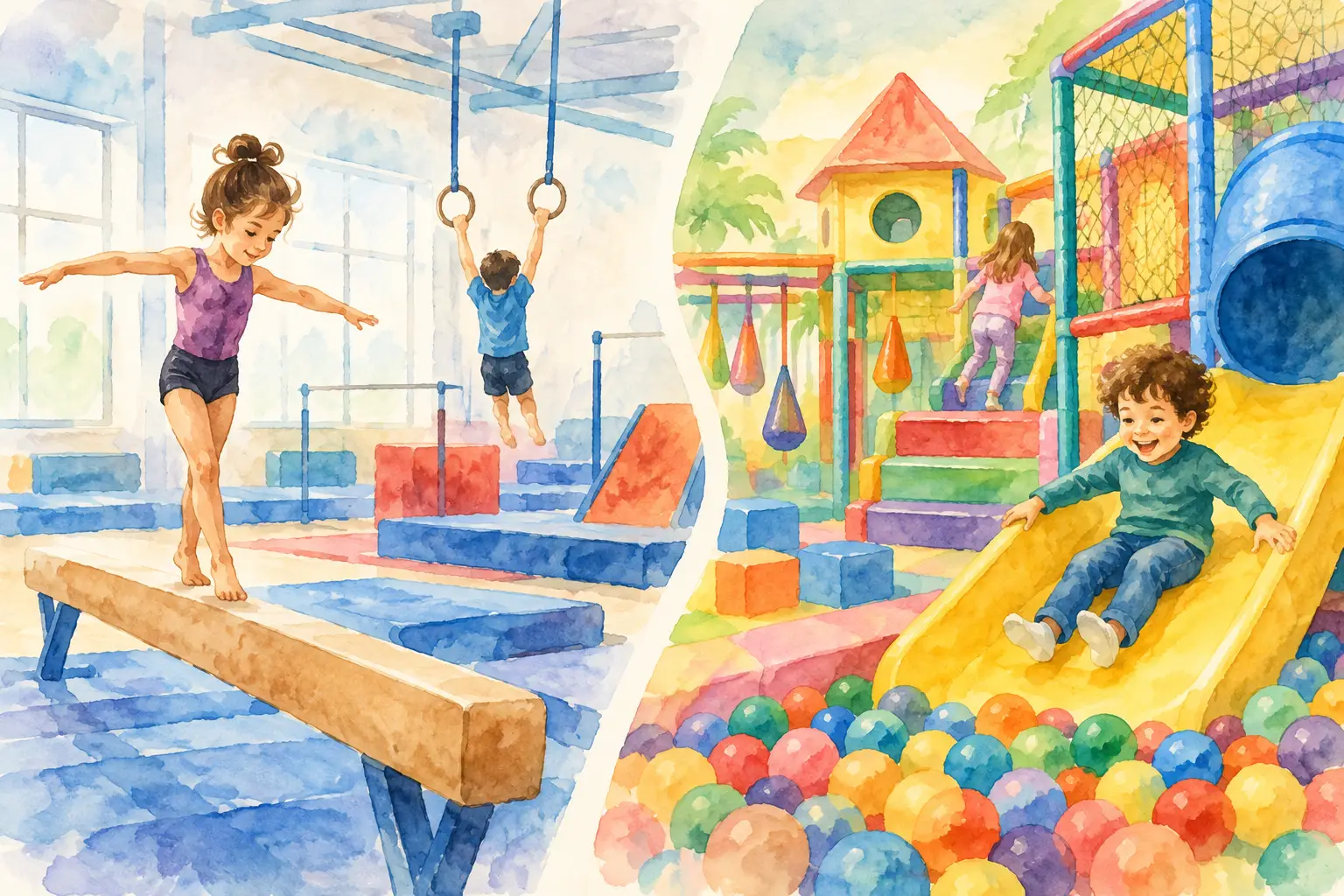
A children’s gym is often centered on organized movement. The space may include mats, balance beams, trampolines, climbing equipment, or obstacle courses, and many gyms offer instructor-led classes. Children may practice jumping, tumbling, balancing, following directions, and taking turns as part of a planned activity.

A play center is usually designed for open-ended indoor play. Kids may explore multi-level structures, slides, tunnels, climbing features, pretend-play areas, and other activities at their own pace. Rather than waiting for the next class to begin, families can often arrive for open play and let children choose where to start.

Neither format is automatically better. A child who loves routine, instruction, and practicing a new physical skill may thrive in a gym class. A child who wants to climb, invent games, and move between activities may enjoy the freedom of a play center. Many families find value in both, depending on the day.

When a Children’s Gym May Be the Better Fit

Children’s gyms can be a wonderful choice for kids who respond well to structure. In a class setting, an instructor may lead warm-ups, guide children through stations, and introduce skills in an age-appropriate order. That format can be especially helpful for children who enjoy knowing what comes next.

The focus on specific physical skills is another advantage. Gym activities can support coordination, body awareness, balance, strength, and confidence. For a child interested in gymnastics, dance, ninja-style obstacles, or tumbling, a gym can offer focused practice along with a chance to learn from trained staff.

Parents should also consider the schedule. Gym classes often happen at set times and may require registration, membership, or a multi-week commitment. That consistency works well for families who like having a regular weekly activity. It can be less convenient when you need a flexible option after school, during a school break, or on a day when everyone simply needs to get out of the house.

Some gyms offer open-gym sessions, but the experience varies. Before visiting, it helps to ask whether open play is available, which ages are welcome, how equipment is used, and whether a parent stays with the child.

When an Indoor Play Center Makes More Sense

An indoor play center is often built around choice. One child may head straight for the climbing structure while another settles into imaginative play or spends time in a toddler area. This can make it easier for siblings with different interests to enjoy the same outing.

Open play also gives children room to practice an important skill: deciding what to do next. They can climb, crawl, slide, build confidence, join a game, take a break, and return to activity without being rushed through a sequence. For many children, that freedom creates a natural mix of physical exercise, creative thinking, and social interaction.

Flexibility is a major benefit for busy Bay Area families. When outdoor plans change because of heat, rain, wind, or smoky air, a climate-controlled indoor space can provide a dependable alternative. It is also useful for playdates, weekend energy release, and those long school-break afternoons when home starts to feel too small.

At a well-designed play center, adults are not expected to simply sit on the sidelines. Parents and caregivers can supervise closely, encourage a hesitant child, and share in the excitement of trying something new. That parent-child connection matters, especially for younger children who are still building comfort in social settings.

Age and Development Matter More Than the Label

The name on the building does not tell the whole story. A great choice for a confident 8-year-old may feel overwhelming for a 2-year-old, and a toddler-focused gym class may not hold an older child’s attention for long.

For babies, toddlers, and preschoolers, look for clearly separated areas that keep smaller children away from fast, big-kid play. A dedicated toddler space should offer opportunities to crawl, climb, explore, and play safely without requiring little ones to compete for room with older children. It should also make it easier for caregivers to stay close.

For elementary-age children, variety usually matters. Larger play structures, climbing challenges, slides, and cooperative activities can keep them engaged while supporting strength, coordination, and problem-solving. Older children may also enjoy the social side of indoor play: making up games, cheering on friends, and negotiating turns.

Children with different comfort levels need different entry points. A child who is cautious around new people may prefer to explore beside a parent before joining other kids. A child with endless energy may need a place that supports active movement without asking them to stay still for long. The right environment gives each child space to participate in their own way.

Safety, Cleanliness, and Supervision Are Non-Negotiable

Whether you choose a gym or a play center, parents deserve clear answers about safety. Ask how often play areas are cleaned, how equipment is inspected, and what staff members do when a child needs help. Clean surfaces, visible facility rules, and attentive staff create a more comfortable experience for everyone.

Supervision can mean different things at different venues. In many family play spaces, parents or caregivers remain responsible for watching their children while staff monitor the overall environment, maintain rules, and support safe play. In a class-based gym, instructors may provide more direct guidance during scheduled activities. Understanding that distinction before you arrive prevents misunderstandings.

It is also wise to notice how the space handles age separation and capacity. A busy room can still feel welcoming when there are clear areas for toddlers, reasonable rules for bigger kids, and enough room for families to move safely. If a facility feels chaotic, it may not be the best fit for your child that day.

Think About the Whole Family Outing

The best choice is not only about what children will do for an hour. Consider parking, check-in, restroom access, seating, food policies, hours, and whether siblings can participate together. These details can make the difference between a fun outing and one that feels harder than staying home.

Parties are another point of comparison. A children’s gym may be ideal for a group that wants instructor-led games or a themed activity. An indoor play center can be especially appealing when guests range widely in age and need the freedom to play in different ways. Parents planning a celebration often appreciate an organized venue where children can stay active and adults do not have to transform their own home into a party space.

Peek-a-Boo Factory is designed for families who want that mix of active indoor play, age-appropriate exploration, and a clean, climate-controlled setting. With areas for toddlers and engaging activities for bigger kids, the goal is simple: give children room to move, learn, and play together while caregivers can stay close.

A children’s gym may become your child’s favorite weekly class, while a play center may become your reliable answer for an unplanned afternoon. Pay attention to what leaves your child smiling, tired in the best way, and eager to return. That is usually the clearest sign you found a place that fits your family.

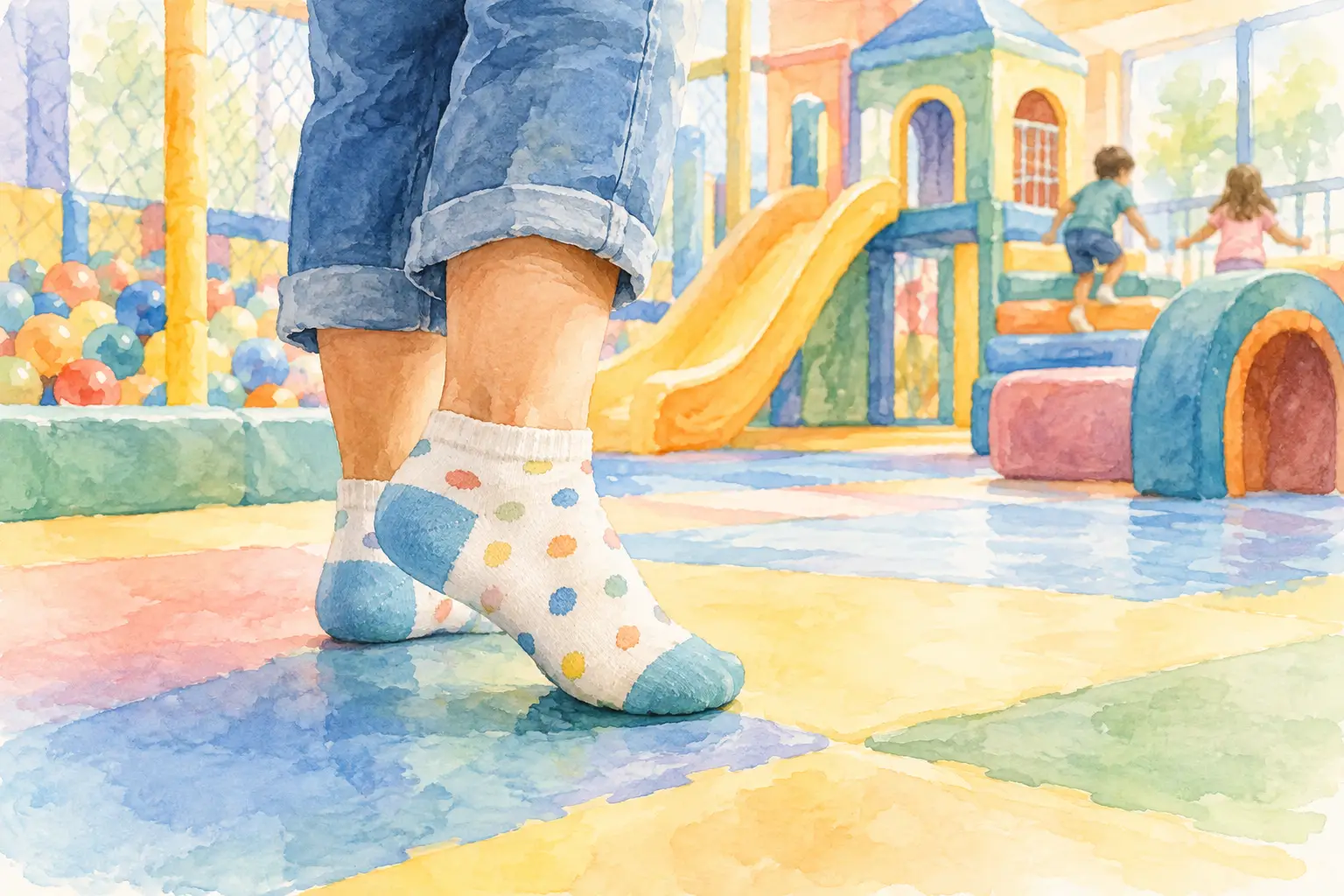
Why Are Playground Socks Required for Indoor Play?

Why Are Playground Socks Required for Indoor Play?

A pair of socks can feel like a small detail when you are packing snacks, water, and an extra outfit for a day out with the kids. Yet when families ask why playground socks are required, the answer comes back to the things parents care about most: a cleaner play space, safer movement, and a more comfortable experience for every child.

At an indoor playground, children climb, crawl, slide, balance, and race from one activity to the next. Their feet touch play structures, padded flooring, steps, ramps, and shared equipment throughout the visit. Requiring socks is one practical way to help keep that active environment welcoming for the many families who use it each day.

Why playground socks are required

Indoor play areas are designed for movement. Bare feet can pick up sweat, dirt, or germs from shared surfaces and carry them from one part of the playground to another. Socks create a simple barrier between little feet and the equipment, helping support the everyday cleanliness standards that families expect in a shared play setting.

They also help with comfort. Many children are happy to play barefoot at home, but indoor playground surfaces can feel different after an hour of climbing and running. Socks offer a layer of protection from rubbing, warm surfaces, and the occasional surprise crumb that may have escaped a snack bag.

Most of all, a socks-required policy gives everyone the same starting point. Parents can feel more confident that the children around them are following a shared hygiene practice, while staff can focus on maintaining a safe, orderly play environment.

Socks support safer active play

Children do not play in straight lines. They hop off platforms, climb through tunnels, crouch in imaginative play spaces, and hurry toward friends calling from the other side of the room. Proper socks can make those movements more comfortable and, in some areas, more secure.

Grip socks are often a smart choice for indoor playground visits. The non-slip material on the bottom may provide added traction on smooth floors and play structures, especially for toddlers who are still building balance and coordination. For older children, grip socks can be helpful during fast-paced play, although they are not a substitute for following playground rules or using equipment as intended.

Regular clean socks may be acceptable in many indoor play settings, but families should check the rules for their location before arriving. Some facilities may require grip socks, sell them on-site, or have specific expectations for adults entering the play area. Requirements can vary because each space has different equipment, flooring, and cleaning procedures.

Socks are for grown-ups, too

Parents and caregivers often enter the playground to help a toddler through a climbing area, offer reassurance at the top of a slide, or join in a little pretend play. When adults are on the play floor, socks help protect the same shared surfaces children use.

This matters especially in spaces designed for younger children. Toddlers spend more time close to the ground, touching floor-level toys and crawling through low structures. Keeping adult and child feet covered helps support a cleaner environment for the smallest visitors.

Choosing the right socks for a playdate

The best playground socks are clean, comfortable, and made to stay on during active play. A pair that constantly slips off at the heel or bunches up inside a child’s shoe can quickly become a distraction. For babies and toddlers, socks with secure cuffs and grippy soles are usually easiest to manage.

It is worth bringing one extra pair in your bag. Children may step in a spilled drink, need a bathroom change, or simply decide that wet socks are unacceptable after one trip through a water table or rainy parking lot. A backup pair means your family can handle the moment without ending the visit early.

Avoid socks with holes, loose decorations, or slick bottoms if your child will be climbing and running. Thick socks can be cozy, but they may feel too warm in a climate-controlled indoor playground after a lot of movement. Lightweight cotton-blend grip socks are often a practical option because they are breathable and flexible.

If your child wears orthotics, has sensory preferences, or needs a particular type of footwear for support, contact the location before your visit. A good play space wants every child to participate safely, and a quick conversation can help clarify what is possible.

Preparing children for the rule

For some children, taking off shoes and putting on socks is no big deal. For others, especially toddlers and children who thrive on routine, it can be an unexpected transition. Mention the sock rule before you leave home: “We will take off our shoes and wear our play socks inside.” A little advance notice can make arrival smoother.

Letting your child choose between two pairs can help, too. Bright colors, favorite characters, or a pair they have worn before can turn a facility rule into part of the fun. If grip socks are new to them, try wearing them at home for a few minutes so the texture does not feel unfamiliar on the day of your visit.

Parents can also model the routine. Take off your own shoes, put on your socks, and explain that everyone helps keep the play area clean. Children often respond well when a rule feels like something the whole family does together rather than a restriction aimed only at them.

Clean play is a shared effort

A socks policy is only one part of maintaining a healthy indoor play environment. Regular cleaning, clear supervision, age-appropriate play areas, and family cooperation all work together. When parents follow posted rules, keep children home when they are sick, and help children use equipment safely, they contribute to a better visit for everyone.

That shared effort is particularly valuable during busy weekends, school breaks, and birthday celebrations. An indoor playground can welcome many energetic children in a single day. Small routines, such as wearing socks and storing shoes where directed, help the space stay organized as families arrive, play, and head home.

At Peek-a-Boo Factory, indoor play is about more than helping children burn energy. It is an opportunity to climb, explore, build confidence, and spend meaningful time together in a safe, clean, climate-controlled setting. Practical guidelines help protect that experience without taking away the joy of free play.

What to do if you forget socks

It happens. A rushed morning, a last-minute playdate, or a child who changed outfits three times can leave socks behind. Before assuming your visit is over, ask the front desk about the location’s options. Many indoor playgrounds keep socks available for purchase, though sizes, colors, and grip styles may be limited.

If socks are available on-site, choosing a pair with grips is often the easiest solution. Keep them afterward in the car, diaper bag, or family activity bag for next time. One spare pair for each child can save a surprising amount of stress on future outings.

If your child refuses the replacement pair, give them a moment. Offer a snack, let them hold the socks, or explain which activity they can try first once they are ready. There is no need to turn a small clothing issue into a battle when a calm reset may be all they need.

The goal behind a socks-required policy is not to make family outings harder. It is to make shared indoor play cleaner, more comfortable, and safer for children of different ages. Pack the socks, bring an extra pair if you can, and let your child get back to the important work of playing, learning, and making new memories.

Party Pricing for a Stress-Less Kids’ Celebration

Party Pricing for a Stress-Less Kids' Celebration

A child may remember the cake, the biggest slide, and which friend laughed the loudest. Parents tend to remember the other details: where everyone will park, whether the younger sibling has a safe place to play, how much setup is required, and who will clean up afterward. That is why party pricing deserves more attention than a single number on a booking page.

For a children’s celebration, the best value is not always the lowest starting price. It is the option that gives your child room to move, helps guests feel welcome, and lets your family enjoy the day instead of managing every minute of it. When comparing party options, look at what is included, what needs to be added, and what responsibilities stay on your shoulders.

What Party Pricing Should Really Cover

Party pricing usually reflects far more than a room reservation. A well-planned party venue is providing a prepared environment, active play opportunities, age-appropriate spaces, time for the celebration, and support that helps the event stay organized.

For families, this matters because children’s parties have a lot of moving parts. Guests arrive at different times. Kids of different ages want different things. A birthday child wants to play right away, while parents may be carrying gifts, helping toddlers, or trying to locate a missing shoe. The right setting accounts for those realities before the first guest walks through the door.

At an indoor playground, the price may include access to equipment and play areas that would be difficult to recreate at home. It may also account for a climate-controlled space, regular cleaning, staff presence, and an environment designed for children to exercise, socialize, and explore. Those details are not simply extras. They shape whether a party feels calm and enjoyable or crowded and stressful.

Before comparing packages, ask one practical question: What would we need to arrange or pay for separately if we chose the lower-priced option? That question often makes the true cost much clearer.

Compare the Full Cost, Not Just the Starting Price

A home party can look less expensive at first, especially if you already have a backyard or living room available. But the budget can grow quickly once you add food, decorations, activities, disposable tableware, cleanup supplies, and entertainment that keeps a group of children engaged. There is also the time cost of shopping, preparing, setting up, hosting, and cleaning after everyone leaves.

A venue party has its own trade-offs. It may come with a higher upfront price, and packages may have guest limits or specific time windows. For many families, though, that structure is helpful. It creates a clear plan for arrival, play, food or cake, and pickup. Instead of trying to turn your home into a party space for one afternoon, you can arrive at a place built for active children.

As you review party pricing, look beyond the headline amount and consider these practical categories:

  • The number of children included and the cost for additional guests
  • The amount of playtime and private party time available
  • Whether a party room or designated celebration area is included
  • What staff support, setup, and cleanup are provided
  • Any food, decorations, invitations, favors, or add-ons your family wants

You do not need every possible upgrade for a memorable celebration. A child who gets meaningful time with friends in a fun, safe space may care much more about playing together than elaborate decorations. Start with the essentials, then choose only the additions that make the day easier or more personal for your family.

Guest Count Changes the Value

Guest count is one of the biggest factors in party pricing. A package that seems ideal for a small group may become less practical if your child wants to invite an entire class, a sports team, cousins, and neighborhood friends. On the other hand, paying for a large package when your child truly prefers a few close friends can create unnecessary pressure on the budget.

Think about the children who are most likely to attend, not only the number of invitations you hope to send. Then consider siblings. Some venues welcome them into the play experience, while others have rules or fees that affect the final total. Asking these questions early helps avoid last-minute surprises.

It is also worth considering the adults who will attend. Parents of younger children often stay to supervise and participate. A welcoming venue gives them a comfortable way to be present while children play, rather than asking them to squeeze into a crowded family room or stand outside in uncertain weather.

Time Has Value, Especially on Party Day

A two-hour party and a two-hour room rental are not necessarily the same thing. If guests need to wait while decorations go up, if children have no play area before cake, or if cleanup begins during the final minutes, the usable celebration time can feel much shorter.

Ask how the party schedule works from beginning to end. Find out when your family can arrive, whether play happens before and after the celebration portion, and how much time is available for gifts, cake, and photos. A clear schedule is particularly helpful for young children, who may be ready to move the moment they arrive.

For Bay Area and Northern California families, indoor play can also bring useful predictability. A rainy weekend, a smoky day, summer heat, or a chilly afternoon does not have to change the plan. That reliability may be part of the value you are paying for, especially when you are inviting guests weeks in advance.

Safety, Cleanliness, and Supervision Are Part of the Experience

Parents should not have to choose between fun and peace of mind. When you are evaluating a party venue, take note of how the environment supports safe play. Look for equipment designed for children, clearly maintained spaces, and a layout that makes it easier for caregivers to keep an eye on their kids.

Age-appropriate design is especially valuable when a party includes a wide range of ages. Toddlers need room to explore without being overwhelmed by bigger, faster children. Older kids need enough activity to stay engaged and burn energy. A dedicated toddler area can make the experience more enjoyable for everyone, including parents who would otherwise spend the whole party redirecting a little one.

Cleanliness matters just as much. Children touch everything during active play, share space with friends, and often eat cake with frosting-covered hands. A venue that prioritizes regular cleaning and clear facility standards is offering reassurance that parents can feel good about. It may not be the most flashy line item on a package, but it is a meaningful one.

Supervision also deserves a careful look. Staff support can help keep the party running smoothly, but parents and guardians should understand their own role in watching their children. The best party environment makes supervision easier through thoughtful design, clear expectations, and a space where adults can stay connected to the play.

Choose Add-Ons That Reduce Work, Not Just Add More Stuff

Optional features can make a party feel special, but they should serve your family’s priorities. Some parents love bringing a theme to life with coordinated decorations. Others would rather keep the room simple and put their energy into a favorite cake, a birthday outfit, or extra playtime. Both approaches can create a joyful celebration.

The most useful add-ons often solve real problems. Extra time can help if you have a larger guest list. A setup or cleanup option can be worthwhile if your schedule is already full. Food may be convenient for a midday party, while a cake-only plan may work perfectly for an afternoon gathering. The right choice depends on your child’s age, the party time, and how much you want to manage yourself.

Be thoughtful about gifts and party favors, too. For some families, a small take-home item is a sweet tradition. For others, the play experience is the treat. There is no need to add items simply because they appear on a checklist. A party budget works best when it reflects what your child will genuinely enjoy.

Questions to Ask Before You Book

A little clarity before booking can prevent a lot of party-week stress. Ask what the package includes, how many children it covers, and whether there are charges for additional guests. Confirm the timing, food policies, decoration guidelines, cancellation terms, and whether there is a dedicated area for younger children.

It also helps to ask what you are responsible for bringing. Some families prefer the flexibility of handling their own cake and decorations, while others want as much included as possible. Neither is automatically better. The right fit is the one that matches your budget, guest list, and capacity to plan.

At Peek-a-Boo Factory, families can look for a party setting that brings together active indoor play, age-appropriate areas, and the dependable comfort of a clean, climate-controlled environment. The goal is not to make every celebration look the same. It is to give children space to have fun while helping parents feel supported.

A good party plan leaves room for the moments no package can list: your child racing to greet a friend, grandparents taking photos, toddlers discovering a new place to play, and a room full of children singing with complete enthusiasm. Choose the option that lets you be present for those moments.

A Parent’s Guide to Hosting Family Celebrations

A Parent’s Guide to Hosting Family Celebrations

The best family celebrations are rarely the ones with the most decorations. They are the ones where children have room to move, adults can relax, and the guest of honor feels genuinely celebrated. This guide to hosting family celebrations can help you make the big decisions early, protect your time and budget, and create a gathering that feels happy rather than hurried.

Start With the Feeling You Want to Create

Before choosing a theme, cake, or guest list, picture the day from your child’s point of view. Do they love racing through active games with classmates? Would they prefer a small afternoon with cousins and grandparents? A confident, outgoing 8-year-old may enjoy a lively group activity, while a toddler may have more fun with a short, familiar celebration and a few close faces.

This simple question shapes nearly every other decision. A birthday party, graduation lunch, baby shower, holiday gathering, or family reunion can all be meaningful, but they need different pacing. A celebration for young children often works best when play is the main event and food is kept easy. For a milestone involving several generations, comfortable seating, conversation time, and a predictable schedule may matter more.

Try to choose one priority: active fun, family connection, a special meal, or a calm shared experience. You can include other elements, but naming the main goal keeps the plans from growing beyond what your family actually needs.

Guide to Hosting Family Celebrations: Make the Big Choices First

The early choices are the ones that prevent last-minute stress. Set a realistic budget, select a date with a backup plan in mind, and decide whether you are hosting at home, outdoors, at a restaurant, or in a dedicated party venue.

Home celebrations can feel personal and flexible. They also ask parents to prepare the space, manage cleanup, plan activities, and keep children engaged. A park party offers room to run, but Northern California weather, wind, parking, and restroom access can change the experience quickly. A party venue can reduce setup and cleanup while giving children a purpose-built place to play, though package details and time limits should be reviewed before you book.

There is no single best choice. It depends on your guest count, your child’s age, the season, and how much hosting work you want to take on. For many families, an indoor, climate-controlled play setting is especially helpful during rainy weekends, hot afternoons, or celebrations with children who need plenty of movement.

Choose a guest list that fits the space

A long guest list can make a celebration feel exciting, but it can also make it harder for the guest of honor to connect with anyone. Consider your child’s comfort level and the capacity of your chosen location. Younger children usually do better when there is enough adult supervision and enough open space for everyone to move safely.

When inviting families, be clear about whether siblings are included and whether an adult should stay. A short, friendly note prevents awkward surprises at the door. If the event includes infants, toddlers, and older children, look for a setting with age-appropriate areas so little ones are not competing for space with bigger, faster play.

Keep the timing child-friendly

A well-timed celebration often feels easier than a longer one. For toddlers and preschoolers, avoid scheduling over nap time whenever possible. For school-age children, a weekend morning or early afternoon can give them energy for play without pushing too close to bedtime.

Most children’s celebrations do not need to fill an entire day. A clear start, active portion, food or treats, and a simple farewell give the event a natural rhythm. Build in a few minutes for late arrivals, but do not delay the main activity so long that early guests lose interest.

Plan an Easy Flow, Not an Overstuffed Schedule

Children do not need constant entertainment when the environment already offers something engaging to do. In fact, too many planned games can create more transitions, more waiting, and more pressure on the adults running them.

A simple flow works well: welcome guests, allow time for free play or conversation, gather for a shared activity or meal, celebrate with cake or another treat, and end with a warm goodbye. If you are bringing decorations, favor a few items that make the space feel festive over a long list of props that require setup and packing.

For a family gathering with mixed ages, offer more than one way to participate. Young children may want to move and explore. Older relatives may appreciate a quieter table for conversation. A photo area can bring generations together without requiring everyone to be on the go at once.

Leave room for real moments

The most memorable parts of a celebration are often unplanned: a child proudly showing a grandparent how high they can climb, cousins laughing over a game, or everyone singing together around the cake. Avoid packing every minute. A little breathing room gives guests time to settle in and lets you notice the moments you worked so hard to create.

Make Food Simple and Inclusive

Food should support the celebration, not become a separate event for you to manage. For a shorter children’s party, snacks, fruit, pizza, sandwiches, or a light meal are usually enough. If your event falls during a standard meal time, guests will reasonably expect something more filling.

Ask about food allergies and dietary needs on the invitation or when guests RSVP. You do not need to offer a large menu, but clear labels and a few thoughtful options go a long way. Keep water available, especially when children are playing actively, and consider easy-to-hold foods that do not require a full place setting.

Cake is a familiar tradition, but it is not the only choice. Cupcakes, cookies, fruit treats, or a favorite family dessert can feel just as festive. Choose what your child will enjoy and what fits your cleanup plan.

Put Safety and Comfort at the Center

A family celebration is more enjoyable when adults know children are playing in a setting designed with their needs in mind. Whether you host at home or elsewhere, think through supervision, entrances and exits, bathroom access, food safety, and the ages of the children attending.

At a play-focused venue, ask practical questions before booking. Is the facility clean and climate-controlled? Are there clear rules for safe play? Is there a dedicated area for toddlers and younger children? How are adults expected to supervise, and what support is available from staff? These details help parents choose an environment where children can exercise, socialize, and explore with confidence.

For Bay Area families looking for an organized indoor option, Peek-a-Boo Factory brings together active play, age-appropriate spaces, and a party setting that helps parents spend less time managing logistics. It can be a helpful fit when you want children to have room for movement while adults remain close by.

Share the Details Parents Need

A good invitation answers questions before guests have to ask them. Include the date, start and end time, location, parking information if useful, RSVP deadline, and a clear note about what children should wear. For an active party, comfortable clothes and socks may be more practical than special outfits.

If parents are welcome to stay, say so. If you are planning a drop-off event for older children, make expectations especially clear and confirm that the venue allows it. A reminder a few days before the celebration can be helpful, particularly for families balancing school activities, naps, and weekend plans.

You can also make arrival easier by asking guests to come a few minutes early if check-in or waivers are required. Small bits of preparation keep the first part of the party from becoming a bottleneck.

Give Yourself Permission to Enjoy It

Parents often carry the invisible work of family celebrations: remembering the candles, answering messages, greeting guests, serving food, and watching the clock. Decide ahead of time what does not need to be perfect. Store-bought treats are fine. Matching decorations are optional. A shorter guest list is not a disappointment if it suits your child.

If possible, ask one trusted adult to help with a specific job, such as taking photos, welcoming late arrivals, or handing out favors. Better yet, skip favors that will create more clutter unless they truly add to the experience. Your attention is more valuable than a themed goodie bag.

When the day arrives, look for your child’s smile, not a flawless timeline. A celebration becomes part of family memory when people feel safe, included, and free to enjoy one another – and that is something no elaborate plan can replace.

How to Manage Playground Germs Without Missing Play

How to Manage Playground Germs Without Missing Play

A busy playground can mean climbing, sliding, laughing, snack crumbs, and plenty of little hands touching the same favorite features. Learning how to manage playground germs is not about making play feel scary. It is about building a few calm, repeatable habits that let children enjoy the movement, friendships, and confidence that active play brings.

Children do not need a germ-free childhood. Everyday exposure helps their immune systems learn, and play is a meaningful part of healthy development. The goal is more practical: reduce the ways common illnesses spread, know when to stay home, and make hygiene easy enough that everyone can stick with it.

Start With the Habits That Matter Most

For most families, hand hygiene does more good than trying to control every surface a child may touch. Germs often move from hands to mouths, noses, and eyes, especially when young children are excited, hungry, or tired. A quick handwashing routine before eating and after play interrupts that cycle.

Soap and running water are the best choice when they are available. Help children scrub the fronts and backs of their hands, between fingers, around thumbs, and under nails for about 20 seconds. Singing a short favorite song can make the timing feel familiar rather than fussy.

Hand sanitizer is useful when a sink is not nearby. Choose one with at least 60% alcohol, use enough to cover both hands, and rub until dry. Because sanitizer does not remove visible dirt, sticky residue, or certain germs as reliably as soap and water, wash hands when you can, especially before snacks or meals.

It also helps to keep hands away from faces during play. That is a big ask for toddlers and preschoolers, so aim for gentle reminders rather than perfection. A simple phrase like, “Hands down until we wash for snack,” gives children a clear next step.

How to Manage Playground Germs Before You Go

A little preparation makes hygiene easier once children are focused on having fun. Pack a small outing kit with water, tissues, wipes for quick messes, a change of clothes for younger children, and hand sanitizer. If your child still mouths toys or has frequent diaper needs, bring a few extra supplies and plan for shorter breaks.

Before leaving home, consider how your child feels. A runny nose by itself can have many causes, including allergies or a lingering cold, so it is not always a reason to cancel plans. Fever, vomiting, diarrhea, a new unexplained rash, or a child who is too tired or uncomfortable to participate are different. Those signs usually call for rest at home and, when needed, guidance from your child’s health care provider.

This choice protects more than other families. A child who feels unwell is unlikely to get the full benefit of active play. Staying home for a day can be disappointing, but it gives them time to recover and helps keep shared spaces more comfortable for everyone.

Choose Play Spaces That Support Clean, Safe Fun

Parents cannot inspect every toy, railing, or play feature, and they should not have to. A well-run indoor playground should make its approach to cleanliness and safety clear through visible routines, attentive staff, orderly play areas, and access to handwashing or sanitizer.

It is reasonable to ask how often high-touch surfaces are cleaned, how the facility handles spills or accidents, and whether there are clear illness policies. The answer will vary by venue and by the age of the children using the space. Soft-play equipment, toddler toys, tables, door handles, and restrooms all need regular attention because they are touched repeatedly throughout the day.

At Peek-a-Boo Factory, families can enjoy a climate-controlled setting designed for active, age-appropriate play, with a dedicated area for children three and under. Separating toddler play from bigger-kid activity is helpful not only for safety, but also because younger children are more likely to put hands and toys near their mouths. It gives parents a better chance to supervise closely and guide hygiene routines when needed.

Cleanliness is a shared effort. Staff can maintain facilities and respond to messes quickly, while parents can supervise children, use designated eating areas, and tell a team member if they notice a spill, a soiled item, or a child who has become sick. Speaking up is not inconvenient. It helps staff address the issue promptly.

Keep Food and Drinks Separate From Play

Snack time is one of the easiest places for playground germs to travel. A child touches a climbing structure, reaches into a snack bag, then shares crackers with a sibling. The fix does not need to be complicated: pause, clean hands, and eat in a designated area.

Whenever possible, keep food and open drinks off play equipment. Bring a labeled water bottle for each child rather than sharing cups, and save sticky treats for after play if you can. Besides reducing germ transfer, this helps keep play surfaces cleaner and may prevent unwanted pests or slip hazards.

For babies and toddlers, wash or sanitize your own hands before preparing bottles, handling pacifiers, or opening snacks. If a pacifier or comfort item falls on a public floor, rinse it if possible and set it aside until it can be properly cleaned. A spare can turn a stressful moment into a simple swap.

Teach Children Without Making Them Anxious

Children notice adult reactions. If every public surface is described as “gross,” they may become worried about normal social play. A steadier message is that germs are tiny, common, and manageable. We wash hands, cover coughs, and give our bodies rest when we are sick.

Young children learn best through routines they can see and practice. Encourage them to cough or sneeze into their elbow, use a tissue when they can, and throw it away afterward. Then remind them to clean their hands. Praise the action specifically: “You covered your cough and washed your hands. That was caring for your friends.”

Avoid relying on disinfecting wipes as a substitute for supervision. Wipes may be useful for a quick cleanup of a personal item, but children should not handle chemical cleaners. Keep products in your bag and out of reach, follow label directions, and never use them on hands or skin unless they are made for that purpose.

Know When to Leave Early

Even the best plan sometimes changes mid-visit. A child may suddenly complain of a stomachache, seem unusually sleepy, develop a feverish feeling, or have an accident that requires more than a clothing change. Trust what you know about your child and choose a calm exit when needed.

If vomiting or diarrhea occurs in a shared play space, alert staff right away and take your child home. Do not try to clean a significant mess yourself unless staff direct you to do so. Facilities have procedures and supplies for closing off and sanitizing the affected area safely.

For minor bumps, tears, or an overtired moment, a quiet water break may be enough. This is where parent-aware play spaces matter: children do not always need a perfect outing. They need responsive adults who can recognize when they are ready to return to play and when they are ready to head home.

Make the Return-Home Routine Easy

The end of play is a smart time for one more handwashing stop. After that, change visibly dirty clothing if needed and clean frequently used personal items such as water bottles, lunch containers, and comfort toys. Regular laundering is generally enough for clothes. There is no need to disinfect every item after every outing unless it has been soiled or someone in the household is ill.

Shoes can stay by the door, particularly after wet or muddy outdoor play, but families do not need to treat a playground visit like a contamination event. The most valuable routine is still the simplest one: wash hands before eating, clean up after bathroom use, and keep sick children home until they are feeling well enough to join the fun.

A confident child climbing a new structure, greeting a friend, or taking turns with a toy is doing valuable work. With sensible hygiene, thoughtful supervision, and a little flexibility, families can make room for both healthy habits and the kind of joyful play children remember.

Playdate Venue Versus Restaurant Party: Which Fits?

Playdate Venue Versus Restaurant Party: Which Fits?

A child who has spent 40 minutes waiting for fries is rarely ready to smile for a group photo. That is the real decision behind a playdate venue versus restaurant party: not simply where to serve food, but where children can comfortably be themselves while adults can enjoy the celebration, too.

Restaurants can be a familiar, easy choice for a small family gathering. But for many birthday parties and larger playdates, a purpose-built indoor play space better matches what children need most – room to move, age-appropriate activities, and time with friends. The best fit depends on your child’s age, guest list, budget, and the kind of memory you want to create.

Playdate Venue Versus Restaurant Party: The Main Difference

A restaurant party is centered on the meal. Guests arrive, sit down, order or receive food, celebrate around the table, and head home. That can work beautifully for older children who enjoy conversation, have a close-knit guest list, or are excited about a favorite restaurant.

A playdate venue is centered on the experience. Children can climb, explore, imagine, play games, and connect with friends before or after a meal or snack. For many kids, especially younger children, that active time is not an extra. It is what makes the party feel like a party.

Neither option is automatically better. A quiet eight-year-old inviting three best friends may genuinely prefer dinner at a favorite pizza spot. A group of preschoolers, siblings, cousins, and energetic classmates may have a much easier time in an indoor setting designed for movement and play.

When a Restaurant Party Makes Sense

Restaurant parties offer simplicity in a few specific situations. If your group is small, your child is old enough to sit through a meal, and the restaurant can comfortably accommodate children, the plan may feel low-pressure. The food is handled, there is no cooking at home, and the event often has a predictable start and end time.

This option can also suit a child whose birthday falls on a busy weekend or during a season when family schedules are packed. A lunch or early dinner may be easier for some guests to attend than a longer event.

Still, parents should look beyond the reservation. Ask whether there is enough room for strollers, high chairs, gifts, and adults who need to move around with little ones. Consider noise levels, wait times, parking, and whether children will have anything to do once they finish eating. A restaurant that works for a family dinner may feel crowded or slow-moving when 10 excited children arrive at once.

The challenge of keeping children occupied

Young children are not being difficult when they struggle to remain seated for a long meal. They are responding normally to a high-energy social occasion with few opportunities to move. Parents may spend much of the party walking toddlers outside, managing boredom, or trying to keep children from weaving between tables.

That can leave the birthday child with less time to actually play with friends. It can also make the adults at the table feel more like crowd managers than guests at a celebration.

Why a Playdate Venue Often Works Better for Kids

An indoor play venue gives children a clear purpose from the moment they arrive: play. Instead of asking them to wait for the fun, it allows the fun to begin right away. Active play supports exercise, imaginative thinking, cooperation, and social confidence, all while helping children use the energy that naturally comes with a celebration.

For parents, the advantage is practical as well as developmental. A clean, climate-controlled, supervised environment removes many of the common worries that come with hosting at home, planning around changing weather, or bringing a large group into a public restaurant. There is room for children to interact and room for adults to stay present.

At Peek-a-Boo Factory, children ages 12 and under can enjoy active indoor play, with a dedicated area for toddlers three and under. That separation matters when guests include a mix of babies, preschoolers, and bigger kids. The youngest guests need space to explore safely, while older children need activities that keep them engaged rather than confined to a chair.

Play makes introductions easier

Not every party guest knows every other guest. A birthday gathering may bring together classmates, neighbors, cousins, and family friends who have never met. At a restaurant, children often stay close to the adults they arrived with because there is little natural reason to interact.

In a play setting, shared activities create an easier starting point. Children can take turns, build, chase, pretend, and laugh together without needing an adult to keep the conversation going. That is especially helpful for shy children and for parents hoping a birthday party will feel welcoming rather than cliquish.

Food Does Not Have to Be the Whole Event

One reason families choose restaurants is understandable: food feels like the hardest part of hosting. But a child’s celebration does not need a full sit-down meal to feel generous or complete. Depending on the party time, pizza, snacks, cake, fruit, or simple kid-friendly favorites may be plenty.

Morning and midafternoon parties are particularly well suited to this approach. Guests can eat before or after the event, while the party itself focuses on play, a treat, and time together. Clear invitation wording helps manage expectations. If you are hosting from 10:00 a.m. to noon, guests will understand that it is a play-and-snack celebration rather than a lunch event.

A shorter food portion can also be easier on children with allergies, selective eating habits, or different family routines. Rather than making the meal the centerpiece, parents can offer straightforward options and let the shared activity carry the celebration.

Compare the Costs Beyond the Menu

A restaurant party can appear less expensive at first glance, especially if you plan to pay only for children’s meals. Yet the final bill may grow quickly with adult meals, drinks, gratuity, taxes, desserts, room fees, or a minimum-spend requirement. Some restaurants also limit decorations, cake service, or the amount of time a large group can use a table.

A play venue may have a more defined package cost, which can make planning easier. Parents often value knowing what the event includes, how long it lasts, and where the children will spend their time. The value is not only the party room or the food. It is also the organized entertainment, the clean play environment, and the ability to host without turning your home upside down.

The right question is not, “Which option has the lowest starting price?” Ask, “What am I receiving for the total cost, and what work am I avoiding?” For a family with a busy schedule, a venue that handles the setting and keeps children happily active can be worth more than a lower menu price.

Choose Based on Your Guest List

Guest age is often the deciding factor. Toddlers and preschoolers typically benefit most from a space that welcomes climbing, movement, and short attention spans. Elementary-age children often enjoy a play venue when they want to be active with friends. Older children may be ready for a restaurant, a movie, bowling, or another interest-based outing.

Also think about the adults. Will parents stay, or are they dropping children off? Are grandparents attending? Will younger siblings come along? A family-friendly venue can make it easier to include everyone, because children have an appropriate place to play while caregivers can supervise and connect.

If your group is small and your child wants a favorite meal with close friends, a restaurant party can feel personal and special. If the guest list is mixed in age, larger, or full of active children, an indoor play party is usually the more comfortable choice.

A Simple Way to Decide

Picture the middle of the party, not just the invitation. Where will the birthday child be happiest? Where will the guests have something positive to do? Where will you be able to relax enough to notice the little moments – the first hello between new friends, the candle wish, the proud smile after a big climb?

Choose the setting that gives your child room to celebrate in their own way. A great party is not measured by how long everyone stays seated. It is measured by children who feel included, caregivers who feel supported, and a birthday child who goes home happily tired.

Soft Play: Why It Matters for Growing Kids

Soft Play: Why It Matters for Growing Kids

A rainy Bay Area afternoon can make the living room feel very small, very quickly. Soft play gives children a place to climb, crawl, slide, and use their imagination while parents know they are playing in an environment designed with young families in mind. It turns the familiar need to “get some energy out” into active, social, age-appropriate fun.

For children, play is serious work. Every trip through a tunnel, careful step across a padded obstacle, and turn-taking moment on a slide helps them learn about their bodies, their surroundings, and other people. For parents and caregivers, the right indoor play space offers something just as valuable: a clean, comfortable place to spend meaningful time together, whatever the weather is doing outside.

What Is Soft Play?

Soft play is active indoor play built around cushioned, child-friendly equipment. Rather than hard playground surfaces and open structures meant for older children, a soft play environment typically includes padded climbing features, slides, tunnels, ramps, ball play, interactive activities, and open areas for movement and imagination.

The goal is not to remove every challenge. Children need opportunities to test their balance, build confidence, and try something new. The difference is that the equipment and layout are designed to reduce the impact of the small tumbles that naturally come with active play.

A thoughtful soft play space also recognizes that a one-year-old and a ten-year-old do not play in the same way. Dedicated toddler areas give younger children room to explore at their own pace, while older kids can enjoy bigger movement-based features and more energetic games. That separation can make a visit more enjoyable for everyone.

Why Active Indoor Play Supports Development

Children do not need a worksheet to practice important skills. Movement gives them many chances to learn naturally, especially when it is fun enough that they want to keep trying.

Movement builds everyday confidence

Climbing steps, navigating obstacles, crawling through tunnels, and landing at the bottom of a slide all help children develop coordination, balance, and body awareness. A child may begin by holding an adult’s hand on a climbing structure, then return a few minutes later ready to try independently. Those small moments of progress matter.

Soft surfaces can be particularly helpful for young children who are still learning where their feet are, how fast their bodies move, and what happens when they shift their weight. They can practice physical skills in a setting that feels exciting without being overwhelming.

Play makes social skills feel natural

Indoor play also brings children together around a shared activity. They wait for a turn, ask to join a game, make room on a structure, and react when another child has a different idea. These are simple interactions, but they are the building blocks of cooperation and communication.

Not every child walks into a play space ready to make a new friend. Some prefer to observe first, while others jump right into the action. Both approaches are normal. A welcoming environment gives children the freedom to engage in the way that feels comfortable to them, with a parent or caregiver nearby for reassurance.

Imagination keeps the experience fresh

To an adult, a padded climbing feature may be just that. To a child, it can become a mountain, a pirate ship, a rescue station, or a secret passageway. Pretend play encourages children to create stories, solve little problems, and communicate ideas with the people around them.

That is one reason soft play can stay engaging across repeat visits. The equipment may be familiar, but the game children create around it often changes every time.

The Details Parents Should Look For

A good indoor play experience is about more than colorful equipment. Parents are right to look closely at the practical details that affect how comfortable and confident their family feels during a visit.

Cleanliness should be visible and consistent. Children touch everything as they play, so routine cleaning, tidy common areas, and clear expectations for guests all help create a healthier environment. Families should also have easy access to places for handwashing or sanitizing before snacks and after play.

Supervision matters, too. Adults should always remain attentive to their children, while a well-managed facility maintains clear rules and staff oversight to help play stay safe and respectful. A supervised setting is not a substitute for a caregiver’s attention, but it provides an extra layer of structure when the room gets busy.

Climate control is another real benefit, particularly for Northern California families planning around foggy mornings, rainy days, heat, or smoky air. Children still need opportunities to move when outdoor plans change. An indoor setting lets families count on active play without having to check the forecast first.

Finally, consider whether the space works for your child’s current stage. A confident elementary-schooler may want room to run and climb, while a toddler may need lower features and a quieter area away from bigger kids. The best choice depends on your family, not just the size of the playground.

Making the Most of a Soft Play Visit

A little preparation can help children settle in quickly and help parents enjoy the outing, too. Comfortable clothes are best for climbing and crawling. Socks are often needed in indoor play areas, so it is helpful to keep an extra pair in the car or diaper bag. For toddlers, a familiar snack, water, and a backup outfit can make the visit easier.

Try to give children a few minutes to observe when they arrive, especially if the space is new or busy. You might start together in a toddler area, walk through the room, or point out a feature they would like to try. Once a child feels oriented, they are often more ready to explore independently.

It also helps to set simple expectations before play begins. Remind children to use walking feet in designated areas, wait for turns, and be gentle with younger kids. Keep the message short and positive. Children are much more likely to remember “one at a time on the slide” than a long list of rules.

For caregivers, soft play can be a chance to participate rather than simply watch from the sidelines. Follow a toddler through a tunnel, cheer on a child trying a new obstacle, or sit nearby while they build the confidence to join other kids. Shared play creates connection, and it lets you see the small accomplishments that can be easy to miss during a busy week.

A Reliable Option for Everyday Family Time

Families need more than special-occasion activities. They need dependable places to go after school, during school breaks, on weekends, and on those long afternoons when everyone needs a change of scenery. Indoor play can fill that gap with an activity that is active enough for children and practical enough for adults.

It can work for many kinds of days: a planned playdate, a grandparent visit, a reward after a busy morning, or an easy way to meet up with another family. Because children of different ages can often find something that suits them, it can be more flexible than activities built around a single class or age group.

At Peek-a-Boo Factory, families can find a safe, clean, climate-controlled setting where children can exercise, socialize, learn, and explore with their parents nearby. With spaces designed for children through age 12, including a dedicated area for toddlers age three and under, the focus stays on helping every child find a comfortable way to play.

Soft Play and Birthday Celebrations

Hosting a child’s birthday at home can be meaningful, but it can also mean weeks of preparation followed by a crowded house and a long cleanup. An indoor play venue gives children a built-in activity while giving parents a more organized setting for the celebration.

The best party experience still depends on the child. Some children love a big, energetic group, while others enjoy a smaller gathering with a few close friends. Either way, active play can reduce the pressure to plan games every minute. Children have room to move, adults have a clear place to gather, and the celebration can feel festive without becoming complicated.

A good play space does not have to compete with outdoor parks or backyard adventures. Each serves a different purpose. Soft play is the dependable choice when families want movement, imagination, and connection in a setting built for children, whatever the day brings. Sometimes the most helpful plan is simply giving kids a safe place to be kids – and giving grown-ups the room to enjoy watching them grow.

Kids Entertainment That Gets Kids Moving

Kids Entertainment That Gets Kids Moving

When the weather is too hot, too wet, or simply not cooperating with family plans, parents still need kids entertainment that gives children a real outlet for energy. The best option is not just something that fills an hour. It gives kids room to move, imagine, build confidence, and connect with other children while adults can stay close, supervise, and enjoy the time together.

For families across Northern California, finding that kind of activity can make weekends, school breaks, and after-school afternoons feel much easier. A purpose-built indoor play space offers a dependable answer: active fun in a clean, climate-controlled environment designed with children and caregivers in mind.

What Good Kids Entertainment Should Offer

Children do not need every activity to be scheduled or screen-based to stay engaged. In fact, many of the most meaningful moments happen when they can choose how to play. Climbing, crawling, pretending, racing, and working out a game with a new friend may look simple from the sidelines, but those experiences support physical and social development.

Good kids entertainment makes room for that freedom while giving parents important reassurances. The space should feel welcoming, organized, and appropriate for the children using it. It should also provide enough variety that a child can stay interested without needing constant direction from an adult.

Movement that feels like fun

Kids are built to move. Indoor active play gives them opportunities to jump, climb, balance, slide, and explore in ways that support coordination and body awareness. For an energetic child, this can mean a much-needed chance to burn off energy. For a child who is initially cautious, it can be a comfortable place to try a new challenge at their own pace.

Movement-based play also works well for siblings with different interests. One child may head straight for a climbing structure, while another settles into imaginative play or explores a smaller activity nearby. The goal is not to make every child play the same way. It is to provide a setting where each child can find something that feels exciting and manageable.

Social time without the pressure

Playdates are valuable because children learn how to share space, take turns, communicate wants, and respond to others. Those skills grow through practice, not lectures. An indoor play environment gives children natural chances to say, “Can I have a turn?” or “Want to play with me?” while parents remain nearby to offer support when needed.

This is especially helpful for young children who are still learning how to join a group. A shared activity can make introductions easier than a formal class or a long restaurant visit. Older children can enjoy the independence of playing with peers, while younger children can explore with a parent or caregiver close at hand.

A place designed for different ages

Age-appropriate design matters. Toddlers need a different kind of play experience than elementary-age children. They benefit from smaller equipment, gentler activities, and enough room to explore without being overwhelmed by bigger, faster kids.

A dedicated toddler area for children three and under helps younger guests play more comfortably. It also gives parents peace of mind during busy times. Older children still need challenges that match their growing confidence, which is why a well-planned indoor playground should offer options across a range of abilities and interests.

Choosing Kids Entertainment for Your Family

The right outing depends on your child, your schedule, and what your family needs that day. A quiet morning with a toddler may call for unhurried exploration. A rainy Saturday with siblings may call for active play and plenty of space. Before choosing an activity, consider whether it supports the experience you actually want to have.

For many families, convenience is part of the decision. If getting everyone ready, packing supplies, and driving across town turns a simple outing into a major project, it may not become a regular part of your routine. Local indoor play spaces are useful because they give families a reliable option close to home, whether they are planning ahead or looking for something to do that afternoon.

Safety and cleanliness are part of the fun

Parents should never have to choose between a fun setting and a responsible one. A clean facility, attentive supervision, and clear expectations for play allow families to relax and focus on their children. Climate control matters, too. It means children can stay active during heat, rain, smoky days, or colder weather without relying on outdoor conditions.

It is reasonable to look for visible signs that a venue takes its standards seriously. Are play areas organized? Is there a clear process for welcoming guests and maintaining the space? Can caregivers easily see and stay connected with their children? These details shape whether an outing feels enjoyable or stressful.

Supervision also has a practical meaning. Children play more confidently when caregivers are present and engaged, and parents appreciate an environment where they can keep an eye on the action. The best spaces encourage families to explore together rather than treating adults as an afterthought.

Consider the time of day and your child’s energy

A successful outing is often about timing. Some children are happiest with active play early in the day, before naps or errands. Others need an after-school reset where they can move after sitting through classes. Weekends can be a great time for a family playdate, particularly when outdoor plans change unexpectedly.

There is no single best time for every family. If your child tends to be shy in larger groups, a quieter weekday visit may feel more comfortable. If they thrive around other children, a busier weekend session may be exactly what they enjoy. Paying attention to your child’s rhythms can turn a good activity into one they look forward to.

Why Indoor Play Has Value Beyond a Rainy Day

Indoor play is sometimes viewed as a backup plan, but it can be a regular part of a healthy family routine. It gives children active time away from home, introduces new social experiences, and breaks up long stretches of sitting indoors. For caregivers, it can provide a welcome change of scenery without the planning required for a full-day outing.

It also supports independence in small, meaningful ways. A child who chooses a route through a play structure, asks another child to join a game, or tries an unfamiliar activity is practicing decision-making and confidence. Those moments add up. They help children see themselves as capable explorers.

For younger children, play alongside a parent creates an opportunity for connection. Naming colors, counting steps, pretending together, or simply celebrating a successful climb can strengthen language and emotional security. For older kids, having room to play with peers gives them space to practice cooperation while still knowing a trusted adult is nearby.

Making Celebrations Easier on Parents

Birthday parties and special celebrations should feel joyful, but hosting at home can bring extra work before, during, and after the event. Cleaning, decorating, preparing food, entertaining children, and managing the post-party mess can leave parents too busy to enjoy the celebration itself.

A children’s party venue can offer a more organized alternative. Kids have built-in activities, guests have a clear place to gather, and parents can focus more on the birthday child and less on turning their living room into a temporary playground. The right venue balances excitement with structure so children can have fun while families feel supported.

At Peek-a-Boo Factory, families can find a safe, clean, supervised indoor setting for active play, parent-child exploration, playdates, and celebrations. With spaces designed for children through age 12, including a dedicated area for toddlers, it is easier to plan an outing that works for the whole family.

The next time your child is bouncing off the furniture, a school break feels extra long, or a playdate needs a simple plan, choose a place where movement, imagination, and connection have room to grow.

Party Package Reviews: What Parents Should Check

Party Package Reviews: What Parents Should Check

A birthday party can look perfect in photos and still leave parents managing details they thought were included. That is why party package reviews are most helpful when they go beyond comments like “the kids had fun.” The best reviews reveal whether the venue was clean, the schedule worked, adults knew what to do, and the birthday child actually had time to play.

For families planning celebrations in the Bay Area and Northern California, a party venue should make the day feel more organized, not add another list of tasks. Looking closely at package details and other parents’ experiences can help you choose a party that fits your child, your guest list, and your comfort level.

Start Party Package Reviews With the Whole Experience

A party package is more than a price and a room reservation. It is the full experience from the moment your family arrives until the last gift is packed into the car. Reviews that describe the entire visit are usually more useful than a star rating alone.

Look for details about check-in, parking, greeting guests, and where families gather before the party begins. A venue may have exciting play equipment, but parents also need to know whether arrival feels orderly when several children and caregivers show up at once. Clear directions, a prepared party area, and staff who can answer questions create a calmer start for everyone.

Pay attention to comments about the pace of the party, too. Young children do not always follow a tight schedule, while older children may want as much active playtime as possible. A thoughtful package balances time to play, eat, celebrate the birthday child, and say goodbye without making families feel rushed.

Look for specifics, not just praise

“Great party” is lovely to read, but it does not tell you what made the party great. More informative reviews mention things such as whether the party host was attentive, whether tables were ready on time, or whether the children stayed engaged.

Specifics also help you compare venues fairly. One family may care most about a private party space, while another wants open play and room for siblings of different ages. The right choice depends on what will make your own child feel comfortable and celebrated.

Safety and Cleanliness Should Be Easy to See

Parents should never have to guess whether a party environment is well cared for. When reading party package reviews, notice whether families mention clean play areas, staff presence, clear rules, and a space designed for children’s active movement.

Indoor play can be a wonderful option when Bay Area weather is foggy, rainy, hot, or simply unpredictable. Still, a climate-controlled space only works well when it is also maintained with care. Reviews may describe clean tables, organized entry procedures, sanitized surfaces, or employees who are visible and helpful throughout the event.

For families with babies, toddlers, and older children attending the same celebration, age-appropriate areas matter. A dedicated toddler space can give little ones room to explore at their own pace while bigger kids enjoy more active play. It also gives caregivers greater peace of mind when the environment reflects how differently children move, play, and socialize at each stage.

No party venue can remove every scrape, spill, or toddler disagreement. What matters is how prepared the team is to supervise the space, respond when help is needed, and support parents in keeping the celebration safe and enjoyable.

Compare What Is Included Before Comparing Prices

The lowest package price is not always the simplest or most affordable choice once add-ons are considered. Before booking, read the package description carefully and use reviews to learn whether the experience matched what families expected.

Consider how many children are included, how long the party lasts, and whether adults can stay comfortably. Ask whether the package includes play admission, a reserved party area, tables and seating, decorations, food, drinks, paper goods, setup, cleanup, or a party host. Not every family needs every item, but knowing the details in advance prevents unwelcome surprises.

A package with built-in cleanup can be especially valuable. At a home party, parents often spend the day before preparing, the party itself serving and supervising, and the evening afterward cleaning. At a venue, the ability to arrive with a cake, enjoy the celebration, and leave without collecting cups from every corner may be worth more than a small difference in price.

Think about the guest list, not just the birthday child

A package should fit the whole group. If your child is turning three, a party with many toddlers may need a different layout and rhythm than a celebration for a group of energetic eight-year-olds. Consider siblings, cousins, grandparents, and caregivers as well.

Reviews can show whether a venue works for mixed-age gatherings. Do younger children have a comfortable place to play? Are there seats where adults can supervise and connect? Is there enough active play to help children burn energy before cake? These practical details often shape how relaxed the adults feel.

Notice How the Venue Supports the Birthday Child

The birthday child does not need to be the center of attention every second, but they should feel recognized. Read for clues about whether staff helped families create a celebratory moment, whether there was time for cake or birthday wishes, and whether the child could enjoy the activities rather than being pulled away for logistics.

Some children love a big group celebration. Others need time to warm up, especially in a new place or around a large crowd. A good party setting gives families enough flexibility to follow their child’s personality. That might mean arriving early to settle in, choosing a smaller guest count, or giving children plenty of free play before gathering everyone together.

At Peek-a-Boo Factory, the goal is to give children a safe, clean indoor setting where active play, social connection, and family celebration can happen in one welcoming place. For many parents, that combination makes a party feel less like an event to manage and more like time to enjoy with their child.

Ask the Questions Reviews Cannot Answer

Reviews are a strong starting point, but they cannot always tell you whether a date is available or whether a package fits your exact needs. Once you have narrowed your choices, contact the venue with a few practical questions.

Ask about the party duration, guest limits, deposit and cancellation policies, outside food rules, and what parents are responsible for bringing. If your child has food allergies, sensory needs, mobility needs, or a preference for a quieter celebration, share that early. A caring venue should be able to explain what is possible and help you decide whether the setting is a good match.

It is also helpful to ask what happens if guests arrive late or if the weather changes travel plans. Indoor venues reduce the worry of a rained-out party, but a clear plan still helps parents feel prepared.

Read Recent Reviews With Your Priorities in Mind

A review from several years ago may describe a different team, package, or facility routine. Give greater weight to recent feedback, particularly when several families mention the same strength or concern. One unhappy comment may reflect an unusual situation; a repeated pattern deserves attention.

Keep perspective as you read. Children’s parties are lively by nature, and every family has different expectations. Instead of searching for a venue with no criticism at all, look for one whose approach aligns with your priorities: supervised play, cleanliness, age-appropriate spaces, clear communication, and a party plan that lets parents be present for the fun.

The right celebration gives children room to move, laugh, and make memories with the people they love. When the package is clear and the setting feels trusted, parents can spend less time coordinating the day and more time watching their child enjoy it.