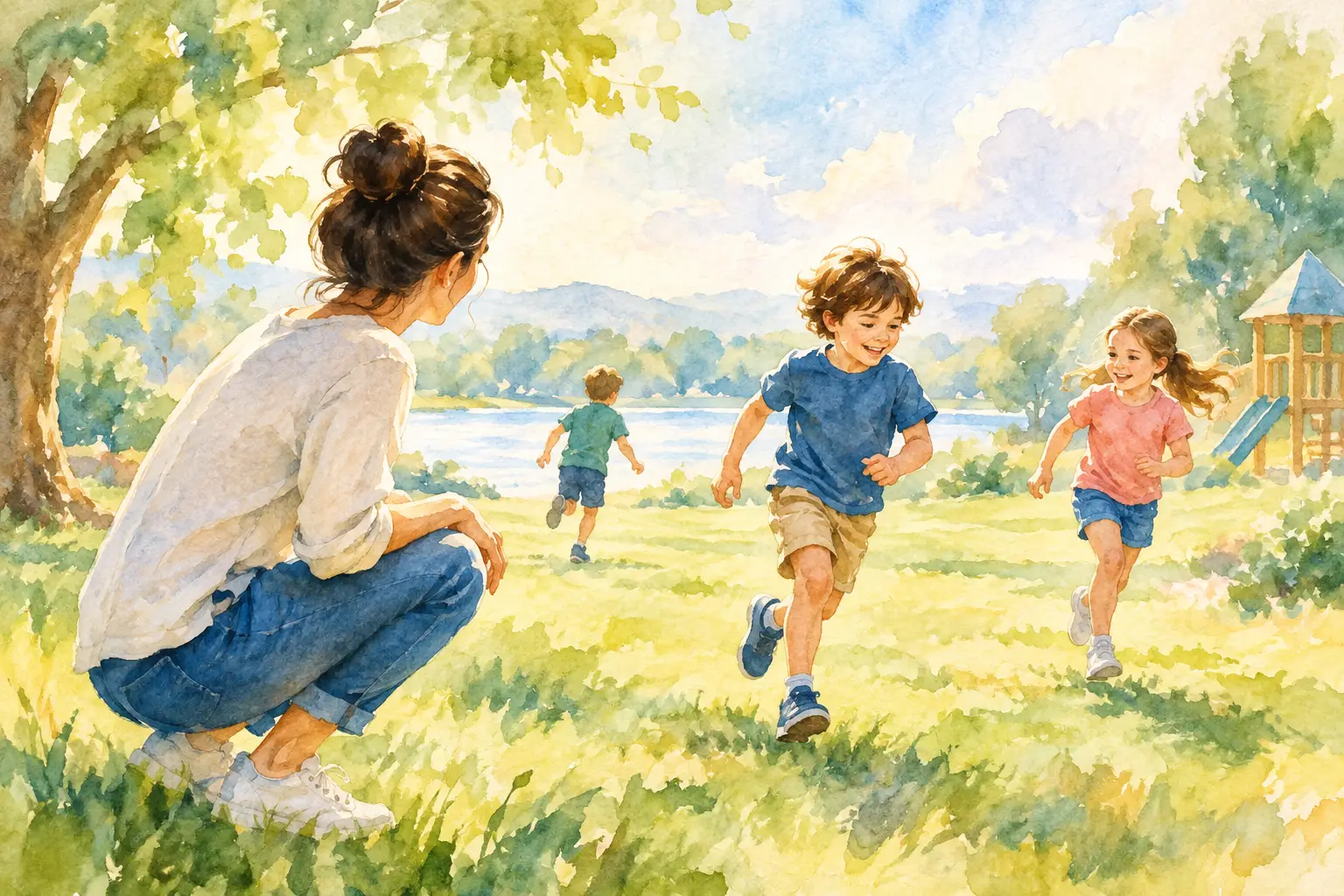
A fast-moving child can cross a room, climb a structure, and join a new game before an adult has finished a sentence. This guide to supervising active children is not about stopping that energy. It is about creating enough safety, structure, and connection for children to move freely while caregivers stay calm and ready to help.
Active play supports strong bodies, growing confidence, and social skills. It also asks adults to make quick decisions: When should you step in? When should you let children solve a small problem themselves? A thoughtful approach helps children enjoy the challenge of play without turning every moment into a warning.
Why active children need active supervision
Active supervision means more than being nearby. It means watching with purpose, anticipating what may happen next, and staying close enough to respond when a child needs help. A caregiver scrolling across the room may be present, but they are less able to notice a child becoming frustrated, attempting a risky jump, or getting separated from the group.
The goal is not constant correction. Children need room to test their abilities, make choices, and build resilience. The best supervision balances freedom with clear limits. You are there to protect children from hazards and guide respectful behavior, while allowing age-appropriate climbing, running, balancing, and imaginative play.
This balance can look different from one child to the next. A cautious child may need encouragement to try the first step of a climbing structure. A fearless child may need a reminder to slow down and check where they are landing. Knowing your child’s usual habits helps you spot when they need closer support.
Start with a plan before play begins
A few minutes of preparation can make a busy outing feel much easier. Before children begin playing, explain where you will be and what they should do if they need you. For younger children, keep the message short and repeat it often: stay where I can see you, use walking feet in busy areas, and come to me if you need help.
If siblings or friends are playing together, set expectations for the group. Remind children that everyone gets a turn and that smaller children need extra space. It is easier to establish these expectations before excitement takes over than to introduce them after a disagreement.
Clothing matters, too. Comfortable clothes and secure shoes make movement easier. Remove loose items that may catch on equipment, and keep water available for breaks. Children who are hungry, tired, or overheated are more likely to become impulsive or upset.
Do a quick safety scan
Whether you are at home, at a park, or in an indoor play space, take a moment to look around together. Check for these basics:
- Clear walking paths and play areas without loose hazards
- Equipment that fits your child’s age, size, and ability
- Separate spaces for toddlers and bigger children when available
- Visible exits, restrooms, and a simple meeting spot
- Other children’s play patterns, especially fast running or rough play
This is not about making children nervous. It helps them learn a useful lifelong habit: pause, look around, and choose a safe way to join the fun.
Stay close enough to respond
For toddlers and preschoolers, close supervision often means being within arm’s reach. Young children are still learning balance, distance, turn-taking, and how their bodies move through a crowded space. They can change direction quickly, and they may not recognize a risk until they are already in it.
Older children may not need an adult beside them every minute, but they still need regular check-ins. Position yourself where you can see the areas they are using, rather than trying to supervise from a seat with blocked sightlines. If your child moves to another area, move with them or agree on a clear boundary before they go.
Try to watch the whole environment, not only your own child. Notice if another child is struggling on a climbing feature, if a game is getting too physical, or if a crowded area needs a little more space. You do not need to manage every child’s play, but situational awareness helps you respond early and respectfully.
Match your supervision to age and ability
Age guidelines are helpful, but ability and temperament matter just as much. Two children of the same age can need very different levels of support.
Toddlers and young preschoolers
Young children need simple directions and frequent reminders. Keep them in age-appropriate areas designed for smaller bodies, especially when larger children are playing nearby. A dedicated toddler area gives little ones more room to explore at their own pace without competing with faster, bigger kids.
Stay nearby during climbing, sliding, and any activity where falls are possible. Let your child attempt manageable challenges, but be ready to steady them when needed. Praise effort with specific words, such as, “You held on and took your time,” rather than focusing only on whether they reached the top.
School-age children
School-age children can usually handle more independence, but they benefit from clear agreements. Decide which areas are okay, how often they should check in, and what respectful play looks like. If they are playing with friends, remind them that being excited does not excuse pushing, crowding, or leaving someone out.
This age is also a good time to teach children to notice their own limits. A child who says they are tired, nervous, or uncomfortable should know they can take a break without feeling embarrassed. Confidence grows when children learn that listening to their bodies is part of being capable.
Step in early, and keep corrections calm
It is usually easier to redirect play before it becomes unsafe. Look for early signs such as repeated bumping, children ignoring turns, a game becoming louder and rougher, or someone looking uncomfortable. A calm, clear instruction works better than a long lecture in the middle of a busy play area.
Try language that tells children what to do: “Feet first on the slide,” “Give her room to come down,” or “That game needs gentler hands.” If a child is too excited to listen, help them take a short reset with you. A drink of water, a few quiet breaths, or a change of activity can be enough to help them return ready to play well.
When children disagree, avoid rushing to solve every small conflict for them. If everyone is safe, give them a moment to use simple problem-solving skills: asking for a turn, choosing another activity, or saying they do not like a game. Step in promptly if there is hitting, repeated exclusion, bullying, or a child who cannot get away from unwanted play.
Choose spaces designed for active play
The environment can make supervision much more manageable. A clean, climate-controlled indoor play space removes some common concerns, including extreme weather, wet surfaces, and unexpected changes in outdoor conditions. Purpose-built play areas also give children room to use their energy in ways that fit their age and development.
Look for clear play-area boundaries, age-appropriate equipment, and spaces that allow adults to maintain sightlines. Separate areas for younger children are especially valuable when families have children of different ages. They allow toddlers to explore more safely while older siblings enjoy bigger challenges nearby.
At Peek-a-Boo Factory, families can enjoy active indoor play in a supervised setting designed for children to exercise, socialize, learn, and explore with their caregivers. Facility support adds reassurance, but a parent or caregiver’s attentive presence remains the foundation of a safe visit.
Make supervision feel like connection
Children do not need adults to direct every game. They do benefit from knowing that someone notices their achievements, checks on their feelings, and is available when play becomes difficult. A quick smile, a shared laugh, or a simple “Show me what you built” can help a child feel secure enough to explore.
The goal is to be a steady home base, not a referee for every moment. When children know the boundaries and trust that you are paying attention, they can use their big energy for what it is meant for: moving, learning, making friends, and having fun.